
What to Wear on an Atacama Stargazing Trip — Men's Guide
Setting up high-powered optical telescopes and long-exposure astrophotography camera rigs beneath the unpolluted dark skies of Chile's high-altitude Atacama Desert is an astronomical pilgrimage unlike any other. At 8,000 to 16,000 feet above sea level, the crystal-clear atmosphere reveals the Milky Way in blinding detail, but as night falls, desert temperatures plunge drastically from sunny daytime heat to bone-chilling sub-zero cold.
Standing stationary for four to six hours on open salt flats and volcanic plateaus in sub-freezing winds presents severe hypothermia risks. Flimsy urban jackets leak cold air within minutes, while light sneakers leave your toes completely numb during extended telescope viewing sessions.
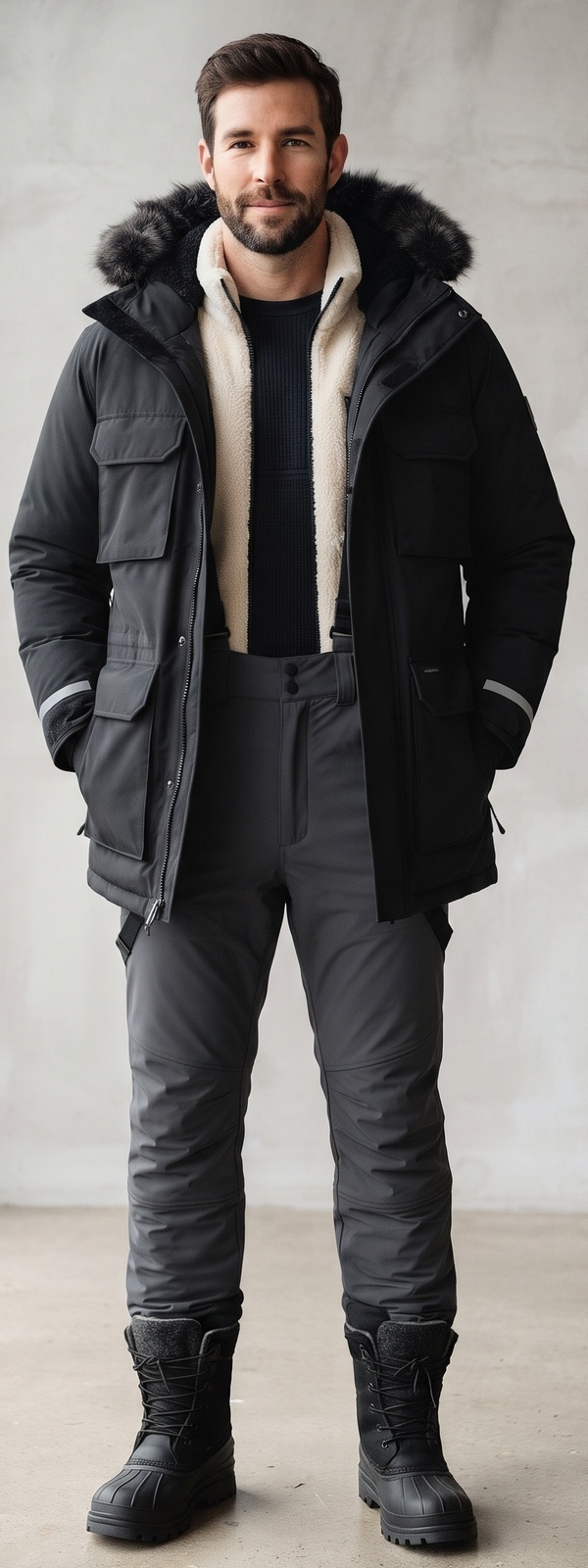
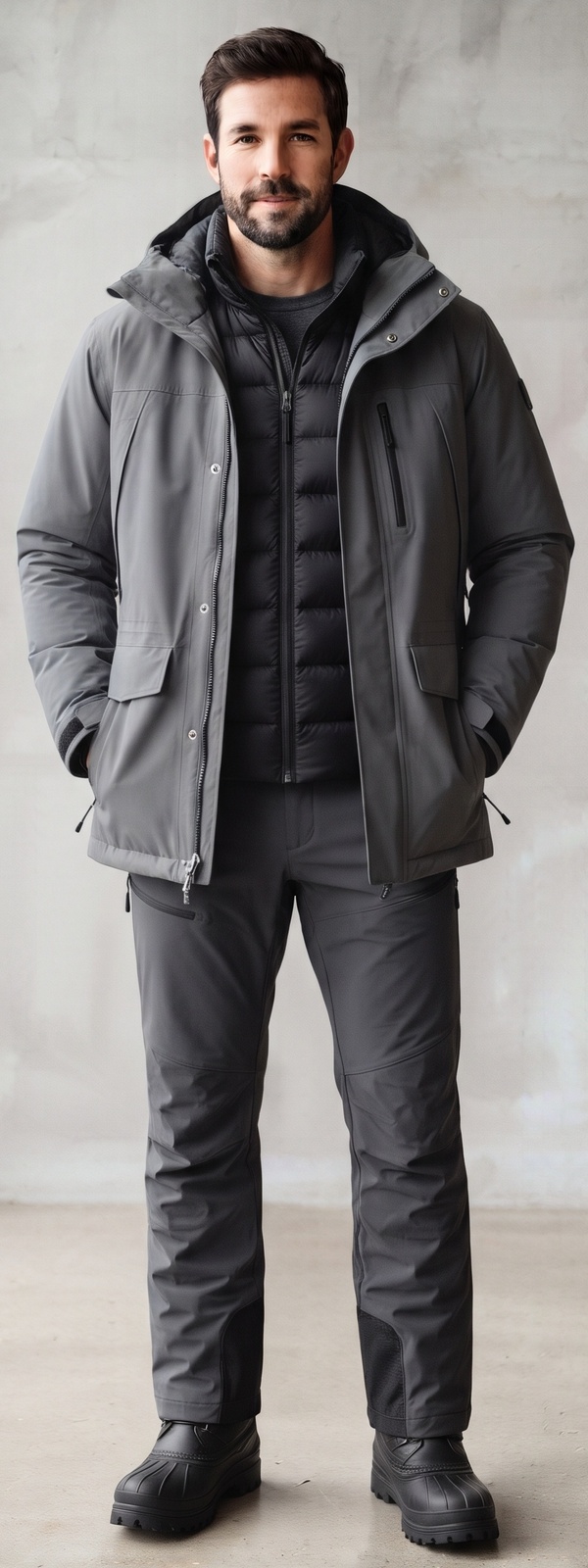
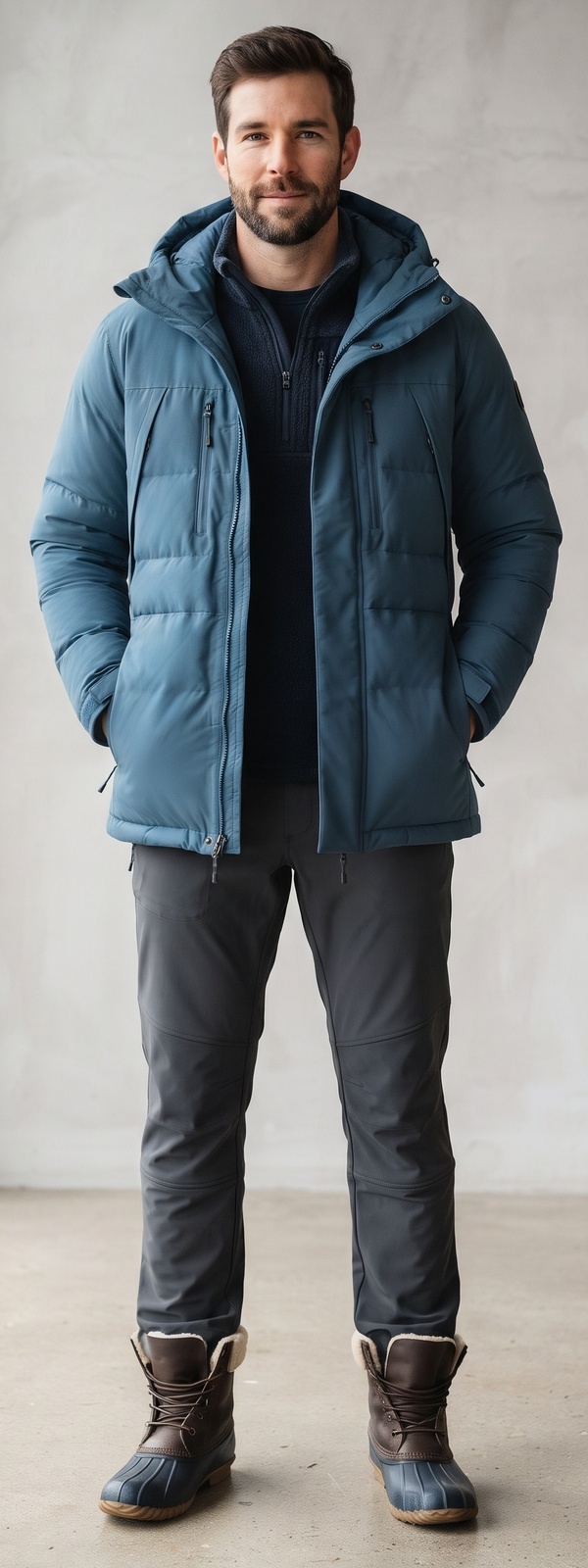
From expedition-grade hooded down parkas and high-loft thermal fleece midlayers to articulated insulated cargo pants and winter snow boots, here is your essential Atacama nocturnal survival guide.
Outfits that work
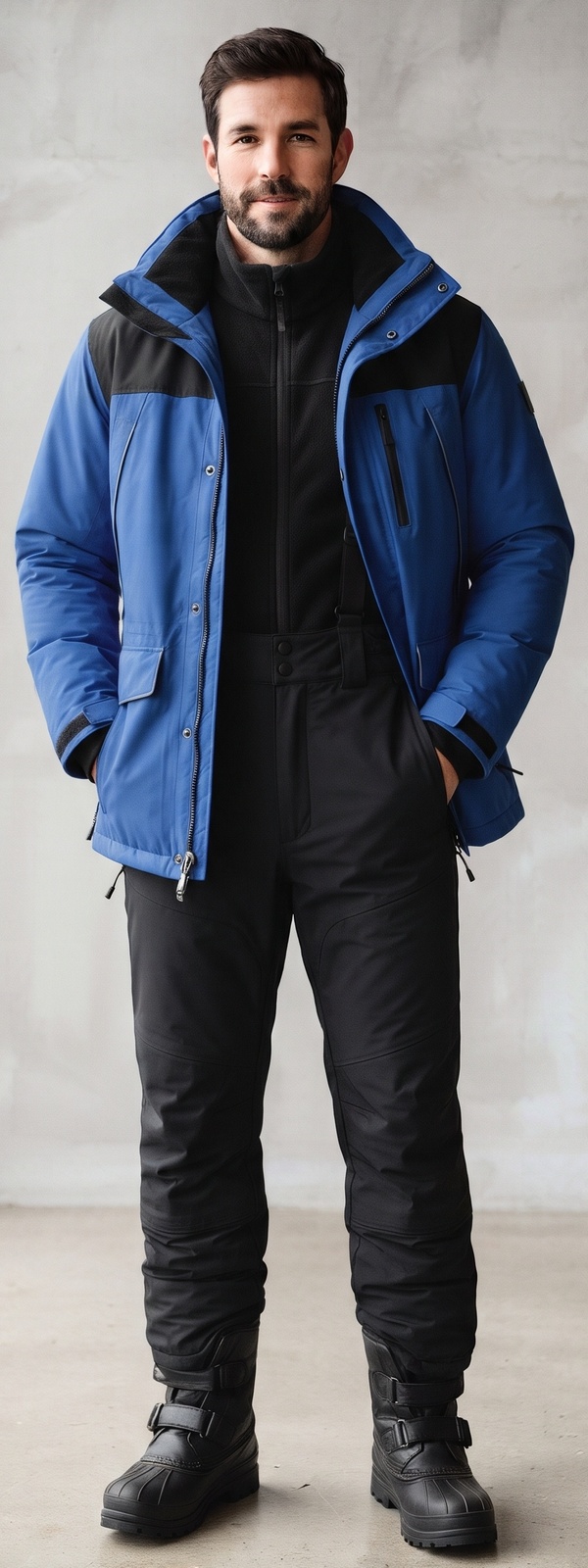
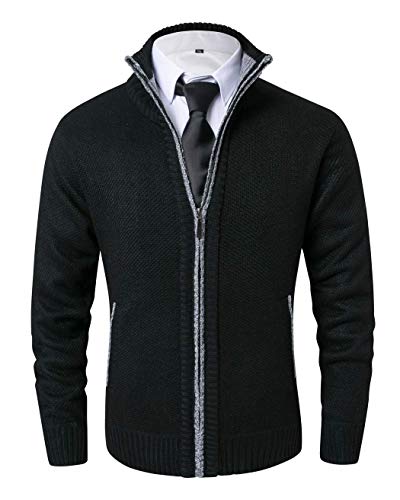
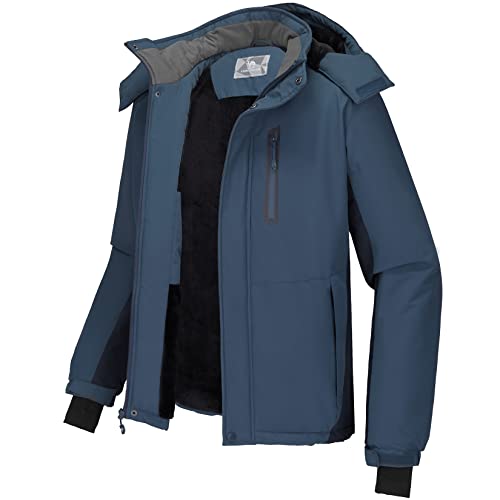
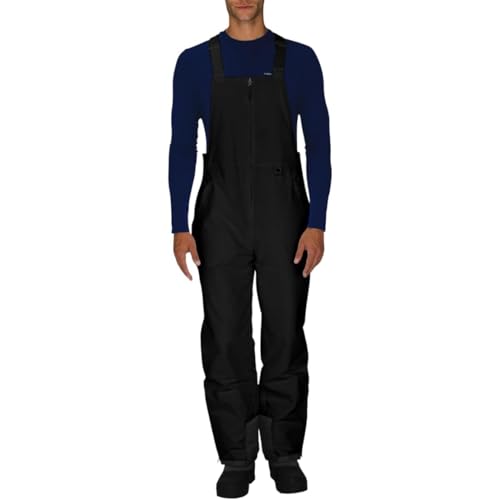
 $109

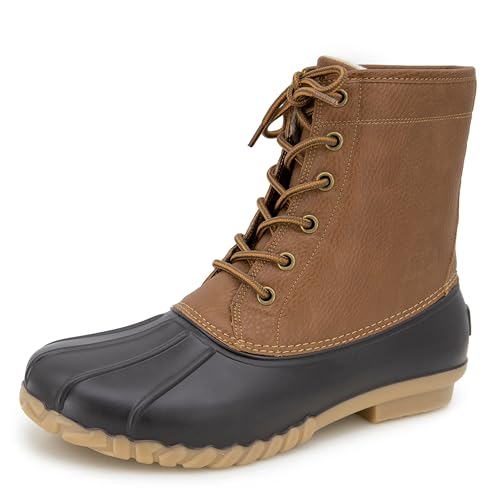
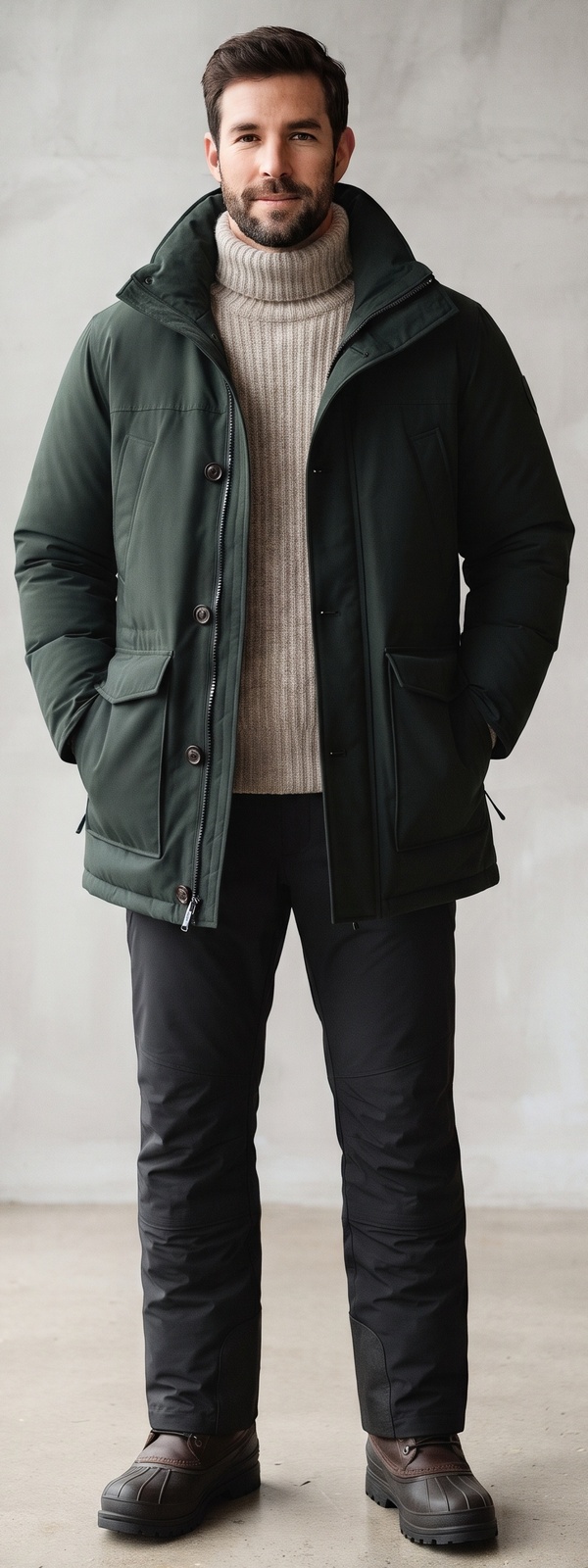
Dark Green Insulated Parka with Ribbed Turtleneck Sweater and Duck Boots
4 pieces · Nov 6, 2026
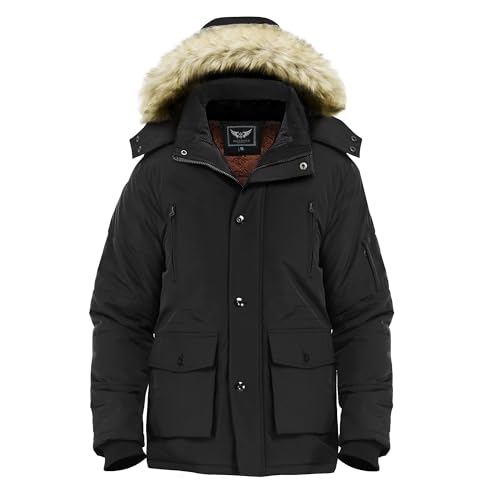
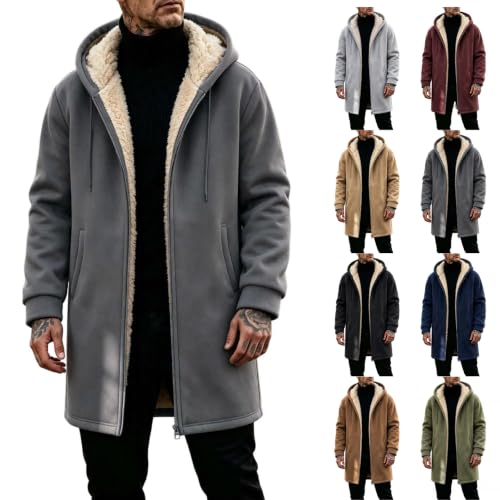
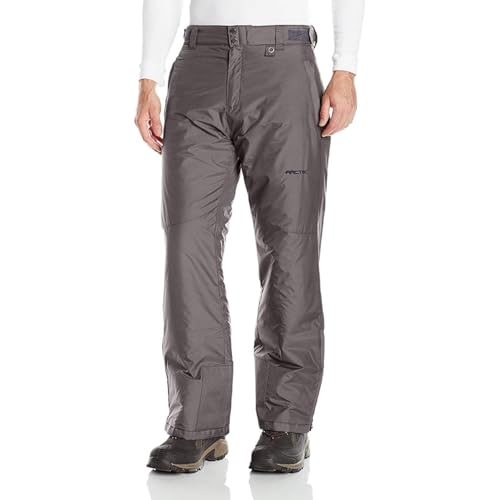
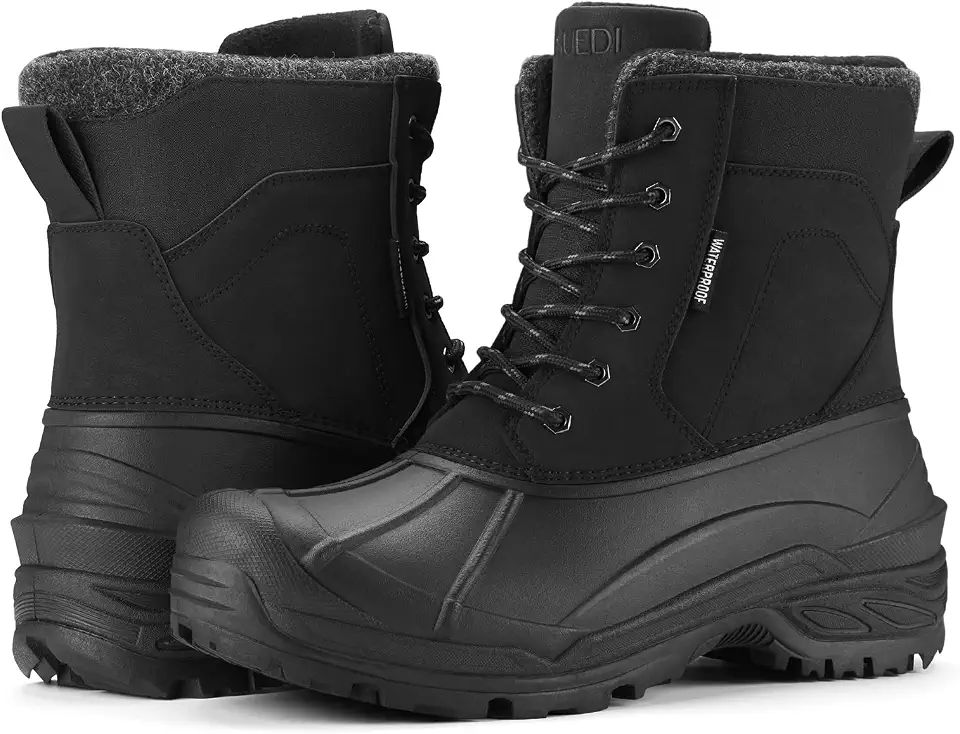
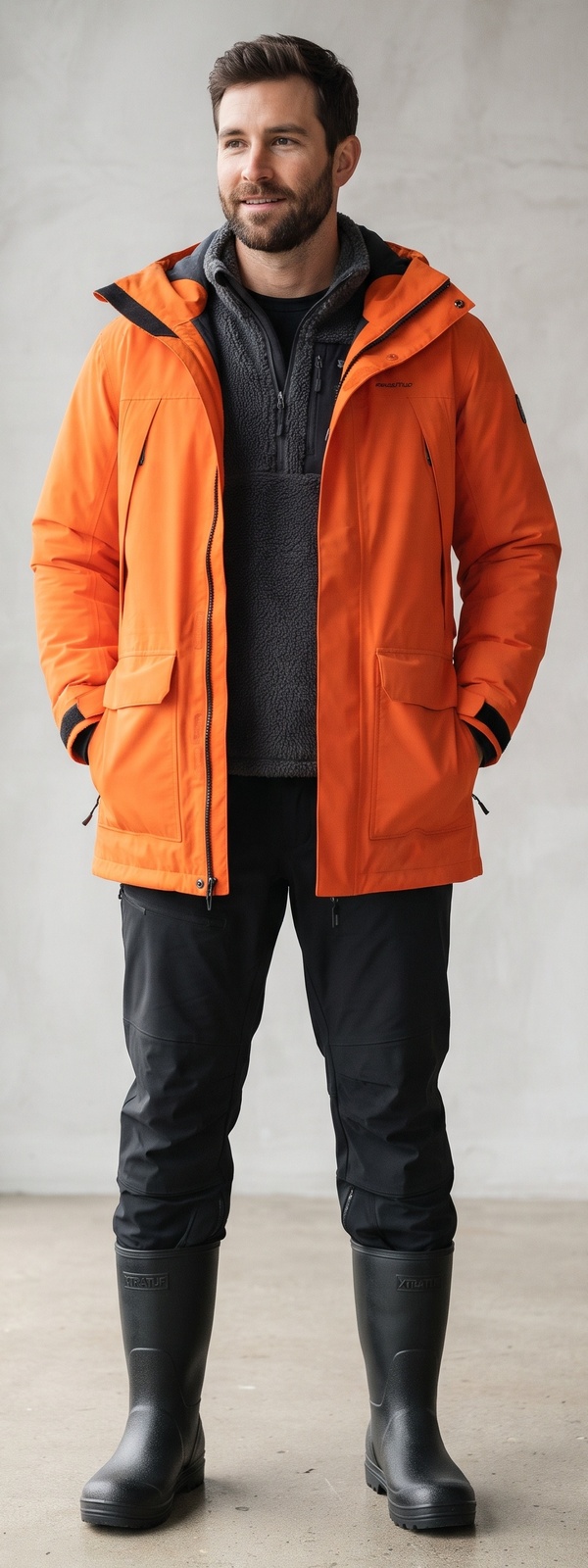 $77
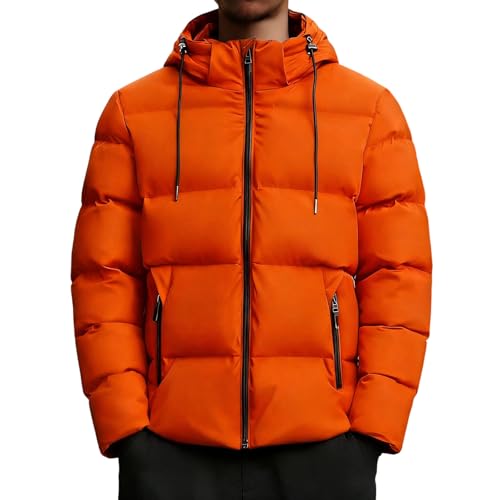
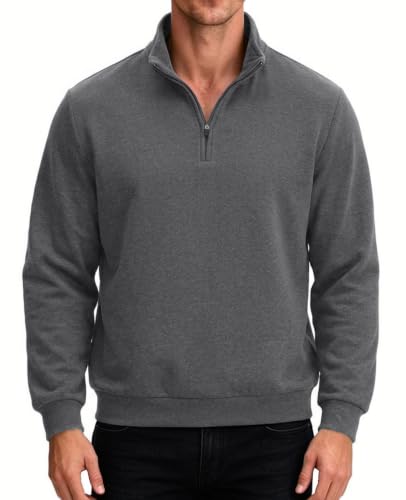
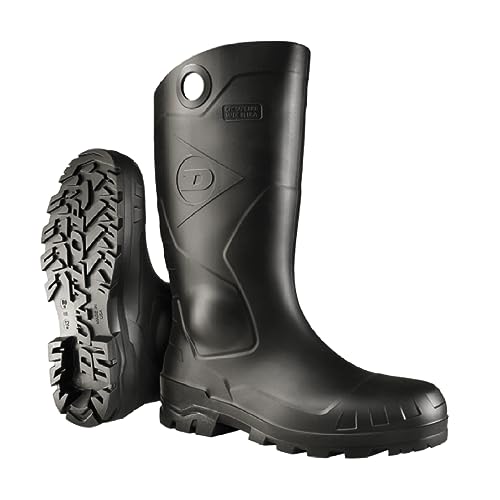
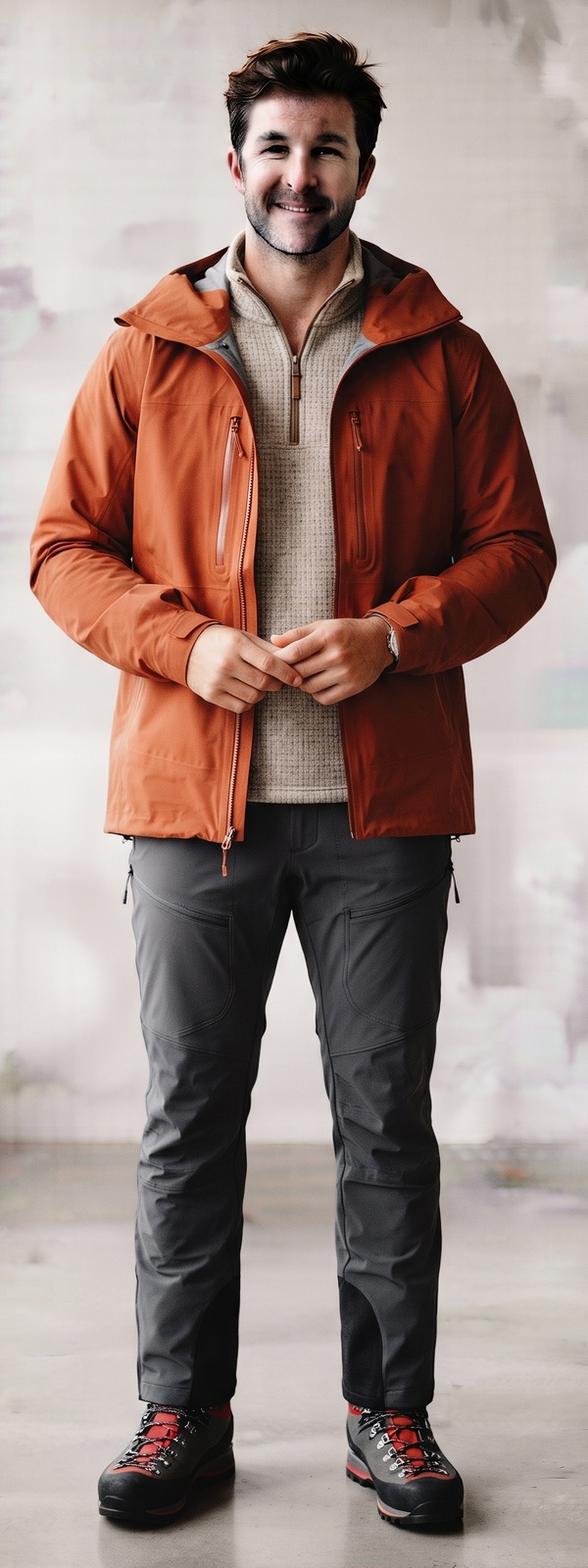
High Visibility Orange Winter Parka with Fleece Pullover and Tall Boots
4 pieces · Nov 6, 2026
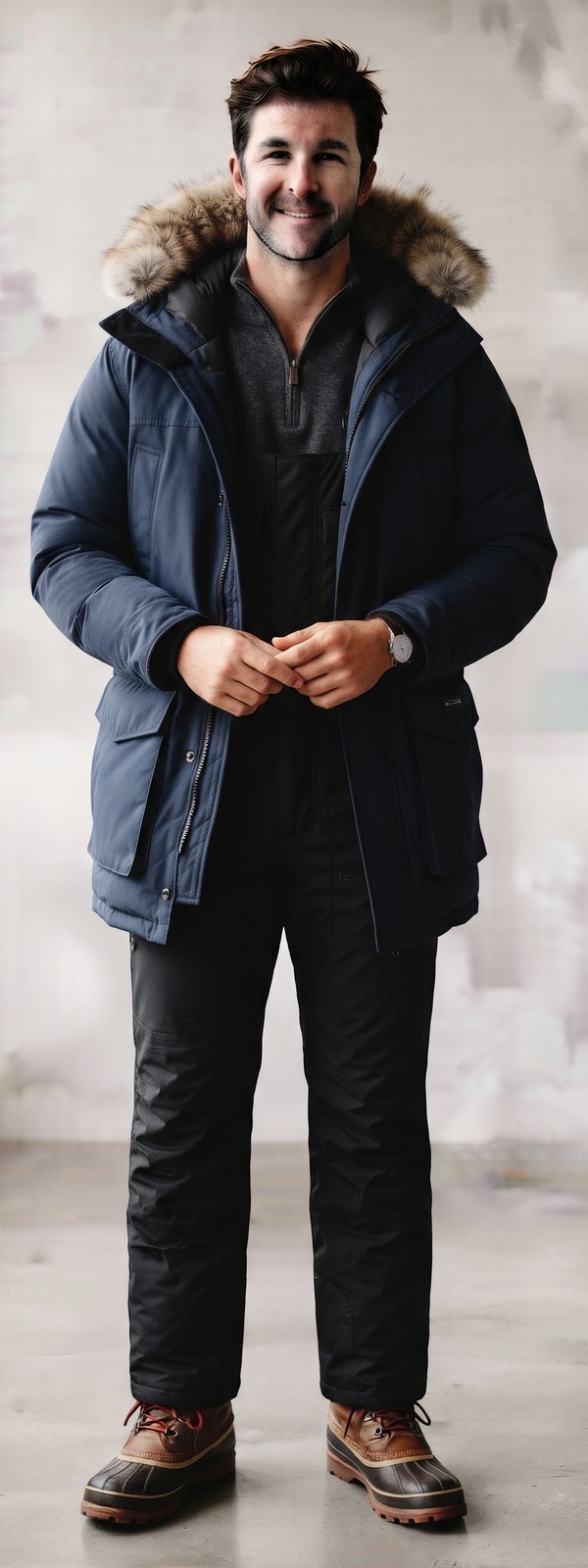
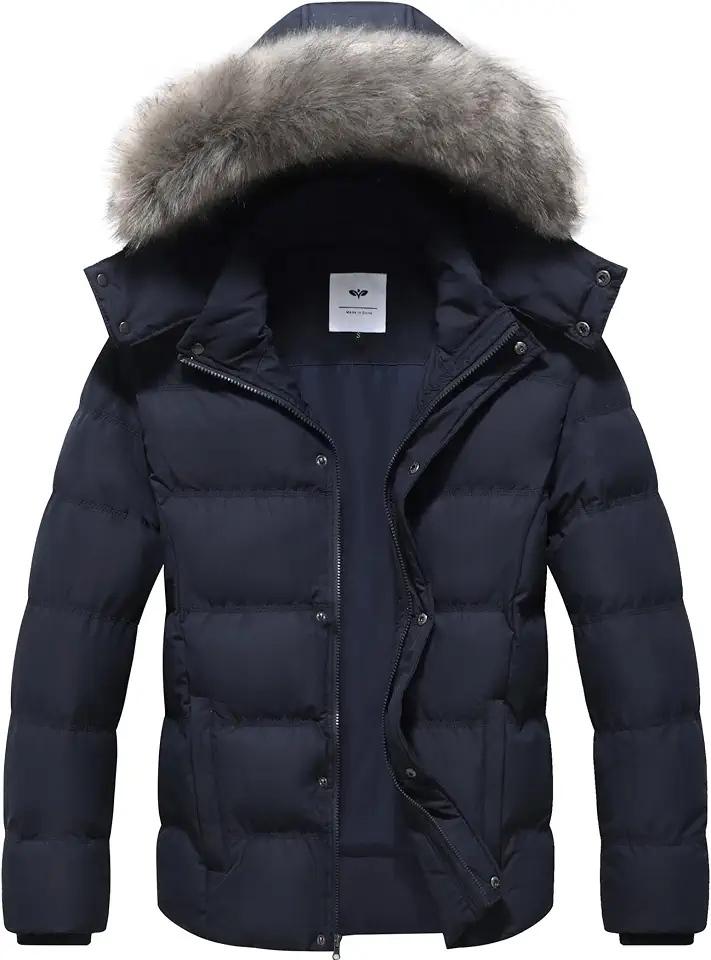
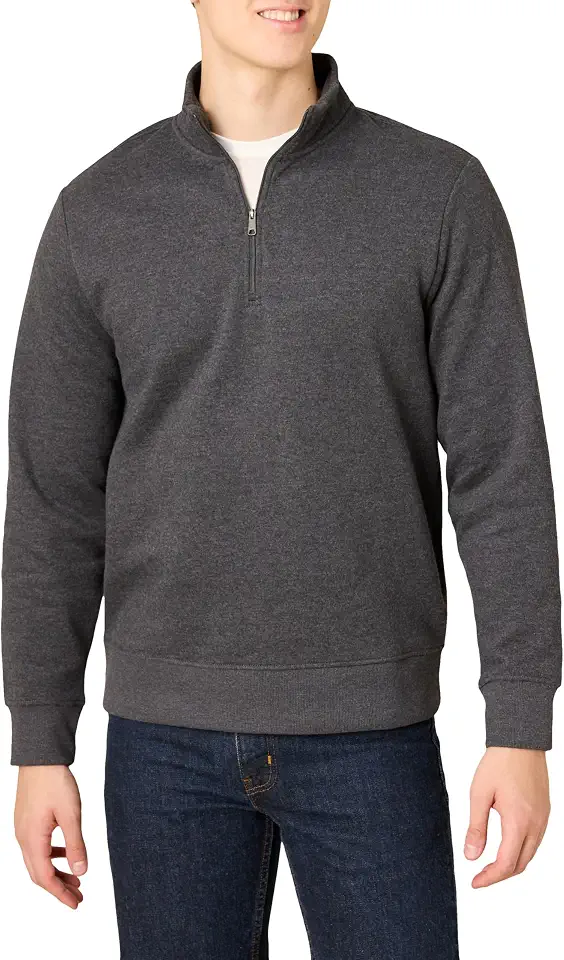
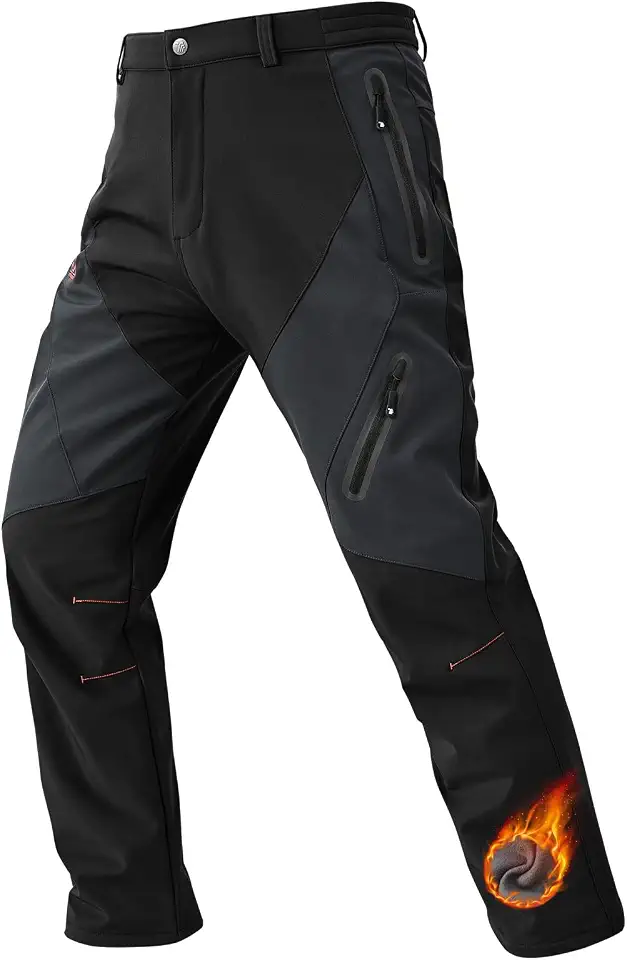
Do
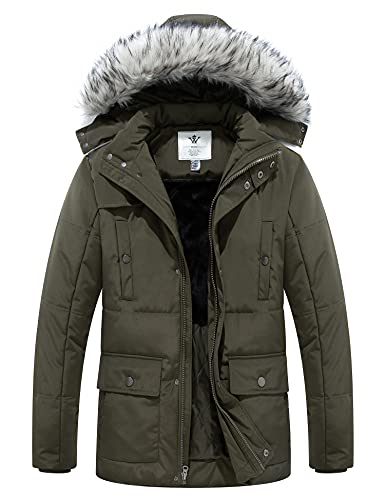
- ✓Wear a heavy expedition-grade down parka with a storm hood to trap essential core body heat in sub-zero desert winds.
- ✓Layer a heavyweight high-loft fleece jacket or packable down midlayer over moisture-wicking merino thermal underwear.
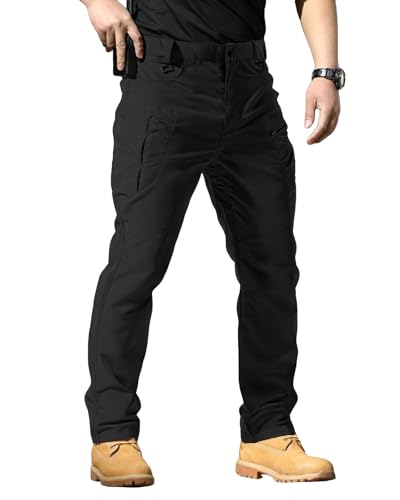
- ✓Choose windproof, insulated ripstop cargo pants that block freezing desert drafts across open observation plateaus.
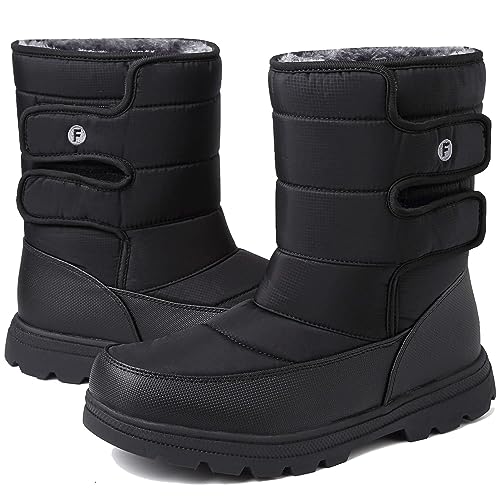
- ✓Opt for heavily insulated, waterproof winter snow boots with thick rubber soles that insulate feet from frozen ground.
- ✓Wear convertible windproof mittens with touchscreen-compatible liner gloves to adjust camera dials and telescope controls.
Don't
- ✗Avoid regular cotton jeans or sweatpants; cotton traps cold moisture against the skin and offers zero wind resistance.
- ✗Don't wear lightweight lifestyle sneakers; uninsulated footwear conducts freezing ground cold directly into your feet.
- ✗Avoid bright white headlamps or flashing LED gear; maintain nocturnal eye adaptation by using red-light settings exclusively.
- ✗Don't expose bare skin to freezing metal telescope tubes, camera tripods, or mount counterweights in sub-zero air.
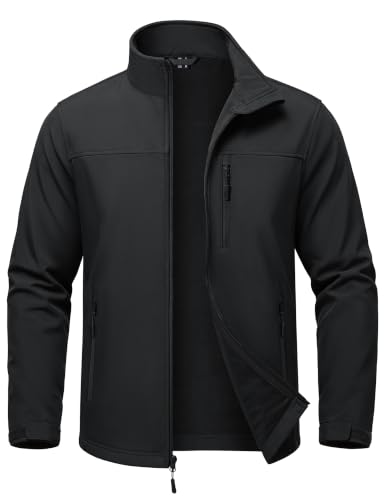
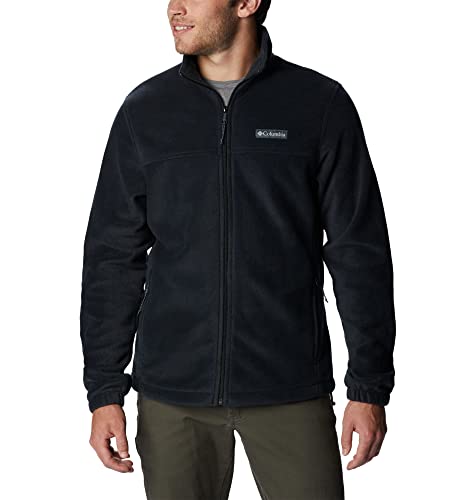
Style tips
The Stationary Freeze Principle
Because astrophotography requires standing motionless for hours waiting for exposures to complete, your body produces minimal metabolic heat. Dress significantly warmer than you would for active mountain hiking.
Gorpcore High-Altitude Palette
High-contrast technical outerwear in cobalt blue, blaze orange, or slate black looks striking when photographed in red-light night portraits and against the alien salt flats under starlight.
Nocturnal Dial Dexterity
Operating intricate focus rings, star trackers, and camera settings in sub-zero winds requires dual-layer glove systems. Wear thin thermal liner gloves under flip-top insulated mittens for instant dexterity.



Related searches
All curated searches
Related Reading
What to Wear for an Olympic Bobsleigh Run — Men's Guide
Thundering down the historic natural ice track of the St. Moritz Olympic Bobrun as a guest passenger exposes you to eighty-mile-per-hour speeds, four G-forces, and sub-zero glacial winds. It is an intense, heart-pounding winter sports spectacle down the world's only natural ice chute. Hurtling through high-banked ice curves in an open steel bobsleigh creates severe convective wind chill against your torso, neck, and extremities. Wearing everyday lightweight outerwear leads to instant numbness, while loose flapping accessories pose lethal hazards inside the narrow sled. Finding the right balance keeps you looking distinguished while remaining completely at ease. From high-performance technical down ski parkas and insulated storm bibs to thermal balaclavas and heavy-duty winter snow boots, here is your comprehensive, field-tested guide to mastering Olympic bobrun gear guide.
What to Wear on a Glacier Snowmobile Traverse — Men's Guide
Throttling across vast glaciated ice caps on high-performance snowmobiles before descending into surreal subterranean blue ice caves is the ultimate sub-zero winter expedition. The journey subjects riders to fifty-mile-per-hour wind chill across open snowfields before entering dripping, sub-surface ice caverns. Glacial traverses demand absolute thermal protection against severe convective body heat loss. Standard alpine ski jackets leak freezing wind around seams at speed, while walking inside wet ice caves rapidly saturates non-waterproof pants and boots, leading to immediate frostbite hazards. Absolute windproofing and waterproof sealing are critical to maintaining warmth across open glacial ice fields. From heavy-duty technical down expedition parkas and insulated waterproof snow bibs to thermal balaclavas and deep-lugged winter duck boots, here is your essential glacier traverse gear guide.
How to Style a Men's Techwear Parka: Urban Technical Shell Guide
Navigate harsh urban weather in style with our guide to styling men's techwear parkas, waterproof shells, and utilitarian cargo pants.
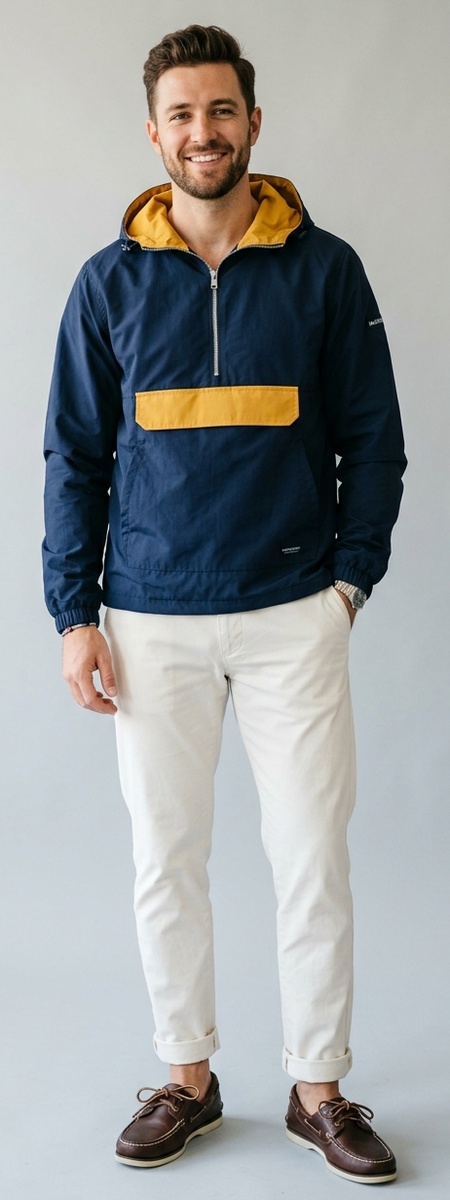
How to Style a Men's Technical Hybrid Field Parka
Discover how to style technical hybrid field parkas. Bridge outdoor weather protection with tailored trousers, rugged knits, and city boots.
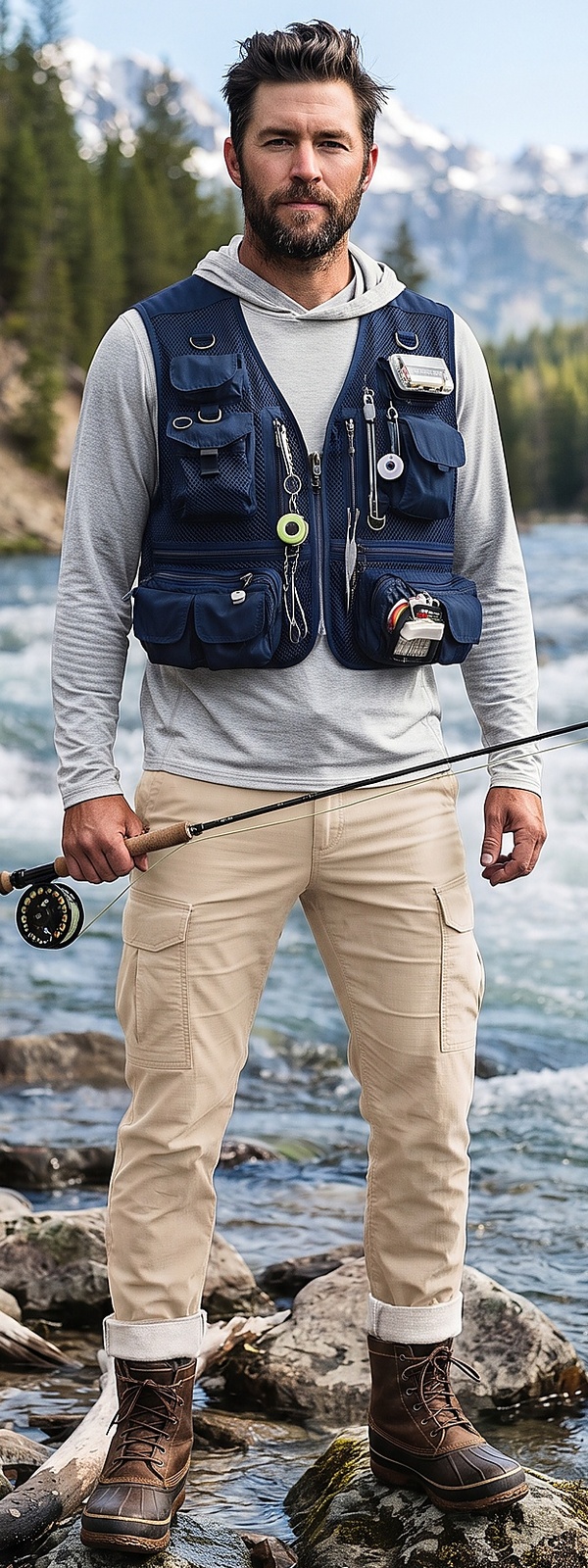
Tactical Utility Vests: Techwear Pockets & Commuter Layers
We engineered this techwear and utility edit around multi-pocket tactical vests and commuter gilets. We layer men's black tactical vests, men's navy waxed utility vests, and men's mesh fishing vests over men's burgundy hoodies, men's cable-knit sweaters, and men's heavyweight tees, paired with men's olive cargo pants and trail sneakers. Providing hands-free storage and sharp utilitarian geometry, our combinations redefine modern commuter fashion.

Winter Sports Tech: Alpine Performance & Sealed Parkas
We assembled this extreme-weather technical showcase around the runway fusion of winter alpine sports performance and city transit style. We combine men's technical mountain parkas, men's seam-sealed hooded windbreakers, and men's padded down liners with men's ripstop cargo trousers and men's waterproof hiking boots. By integrating laser-cut airtight seams and modular thermal utility, our looks deliver uncompromising alpine protection in urban winter environments.
Other Reading
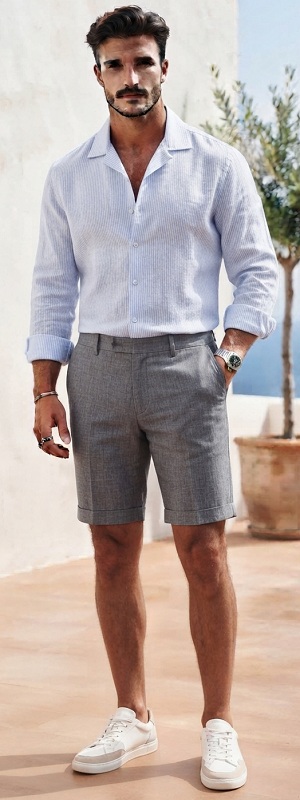
What to Wear to a Beach Day with Friends (Boardwalk & Bonfire) — Men's Complete Guide
A full beach day with your favorite crew is the quintessential summer memory: morning ocean waves and sunbathing, afternoon fish tacos on the boardwalk, and evening guitar songs around a glowing sand bonfire. But staying out for twelve continuous hours requires an outfit that transitions seamlessly across sun and night. The secret to a 12-hour beach day is amphibious summer versatile styling. Tailored quick-dry swim trunks, breezy camp-collar shirts, comfortable slip-on footwear, and a warm evening fleece or hoodie stashed in your beach bag keep you looking sharp in the waves and warm around the twilight fire. Here is how to curate an all-day beach ensemble that moves effortlessly from sand dunes to boardwalk arcades and late-night beach bonfires.
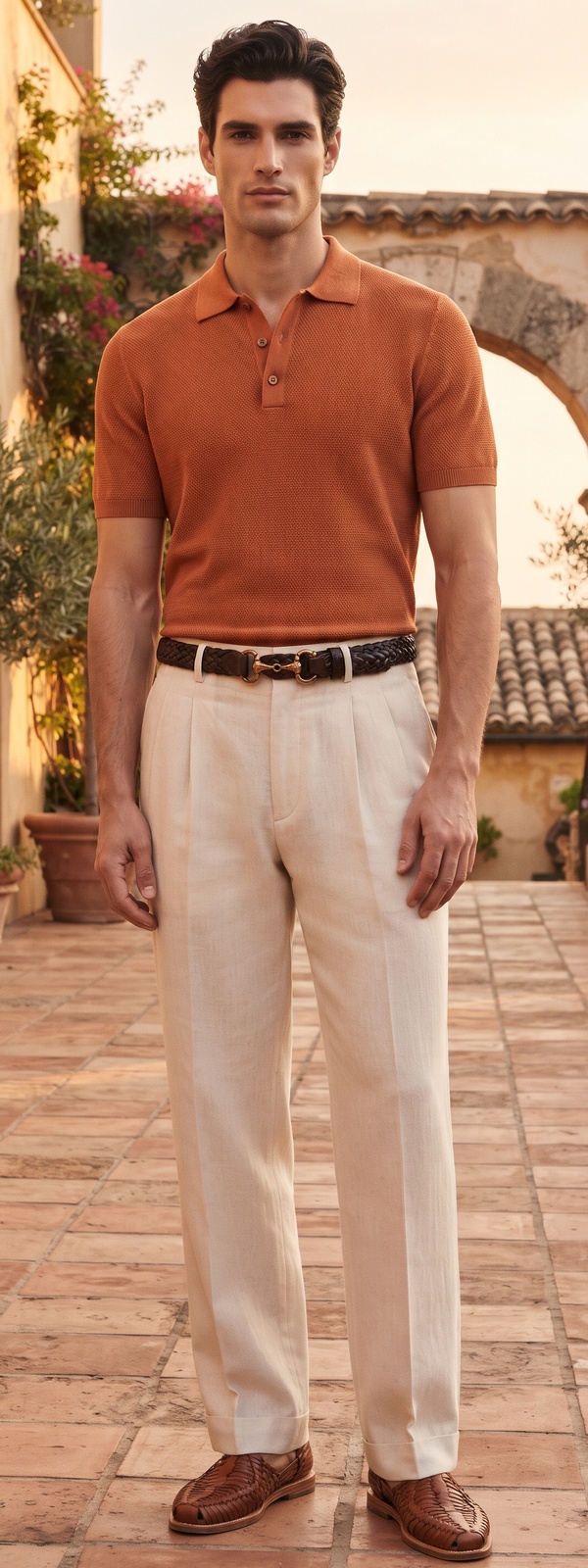
Knit Polos & High Waists: 1970s Riviera Proportions
We engineered this resort-inspired lookbook around the enduring appeal of textured knit polos tucked into high-waisted dress trousers. We feature men's navy knit polo shirts, men's rust knit polos, and men's cream ribbed cardigan polos paired with men's olive pleated chinos, men's pleated cream linen trousers, and men's Gurkha pants. Accented by men's braided leather belts and men's suede loafers, our styling accentuates the waistline while maximizing leg length.
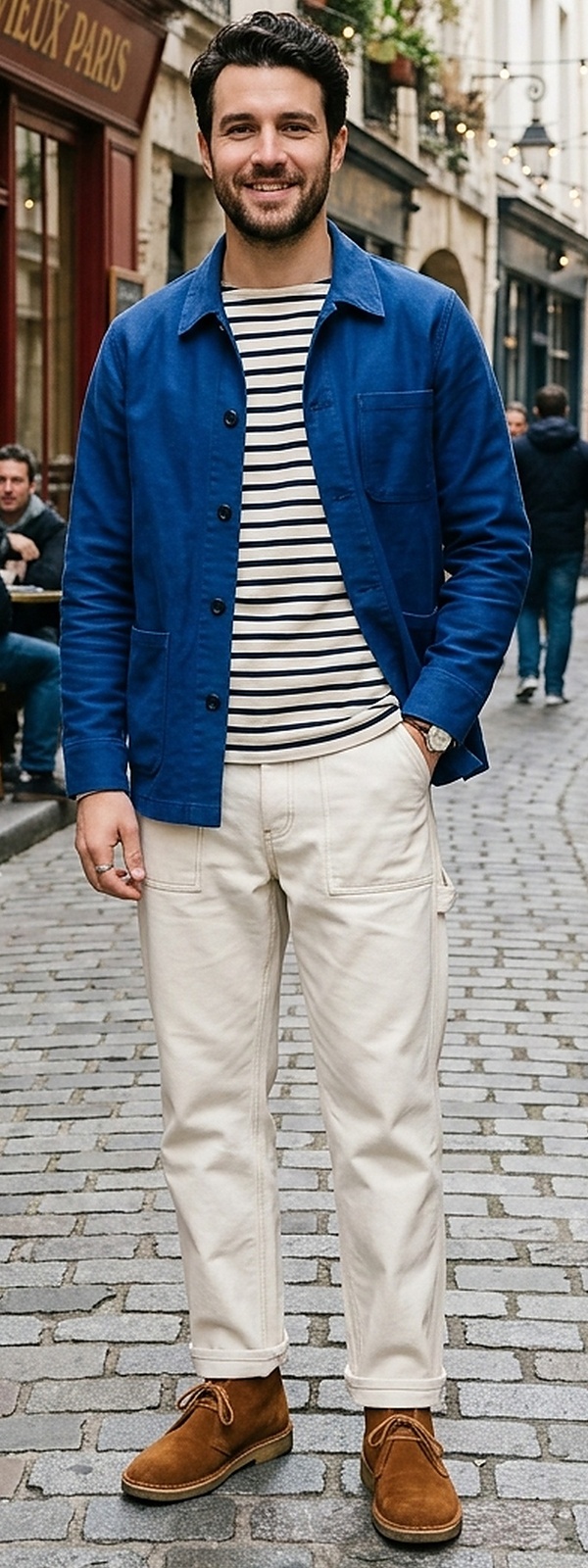
How to Style a Men's Heavyweight Moleskin Work Jacket
Discover how to style the heavyweight moleskin work jacket with Breton stripes, tailored flannels, and rugged European workwear essentials.