
November 22, 2026
How to Mix Patterns in Menswear: Stripes, Checks, and Tweeds
The Pinnacle of Sartorial Self-Expression
For the beginner in menswear, safety lies in solids. A navy suit, a crisp white shirt, and a solid silk tie create an undeniable, risk-free foundation. Yet, as a man develops his personal aesthetic, dressing entirely in flat solid colors can eventually feel sterile and uninspired. The moment you step into the world of pattern mixing—combining stripes, windowpanes, houndstooth, and Prince of Wales checks—you unlock a rich dimension of depth, texture, and visual storytelling.
However, mixing patterns is widely considered the ultimate high-wire act in men's style. Execute it correctly, and you exude the effortless panache of Savile Row or Italian sprezzatura. Get it wrong, and your outfit degenerates into visual static that leaves onlookers dizzy. To combine complex patterns with complete confidence, you only need to master three fundamental governing laws: scale hierarchy, geometric contrast, and the color bridge.
Outfits from this article
 $144
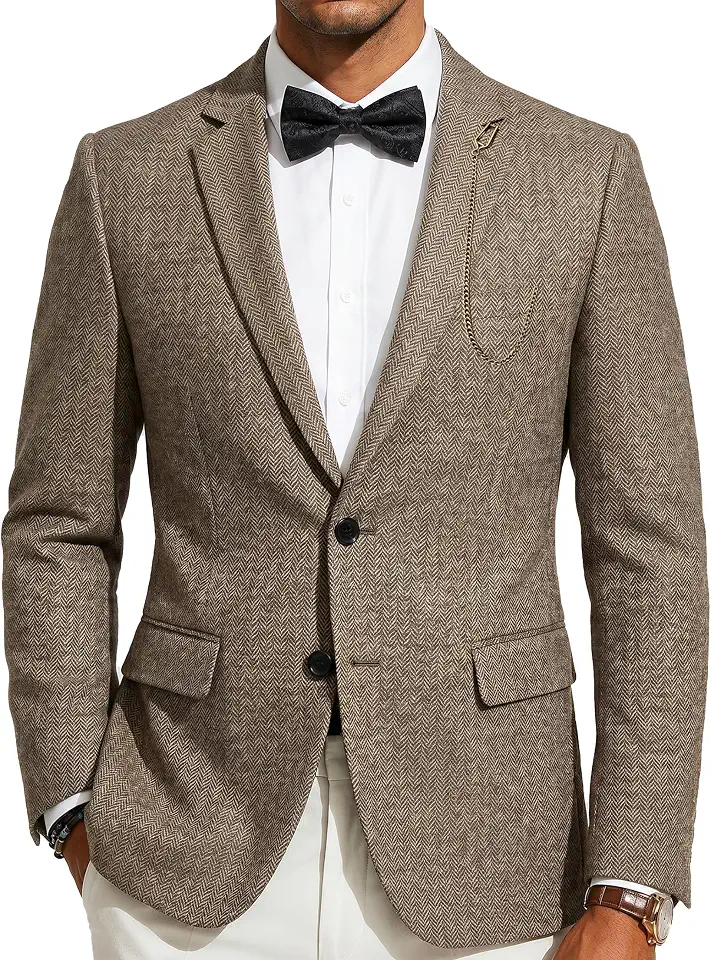
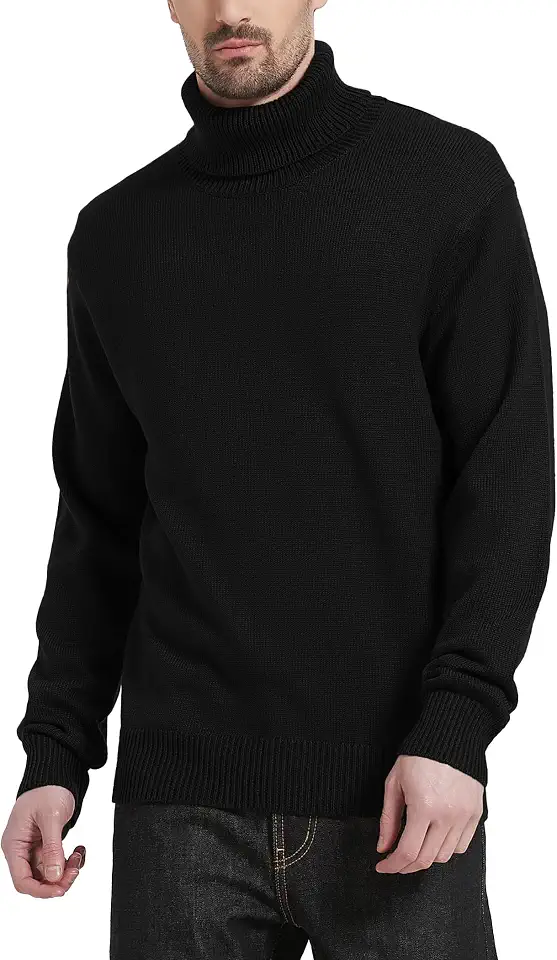
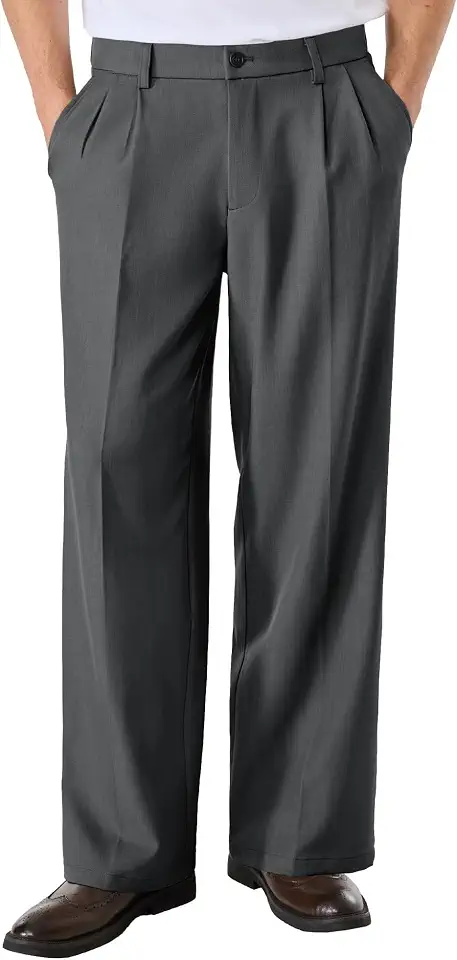
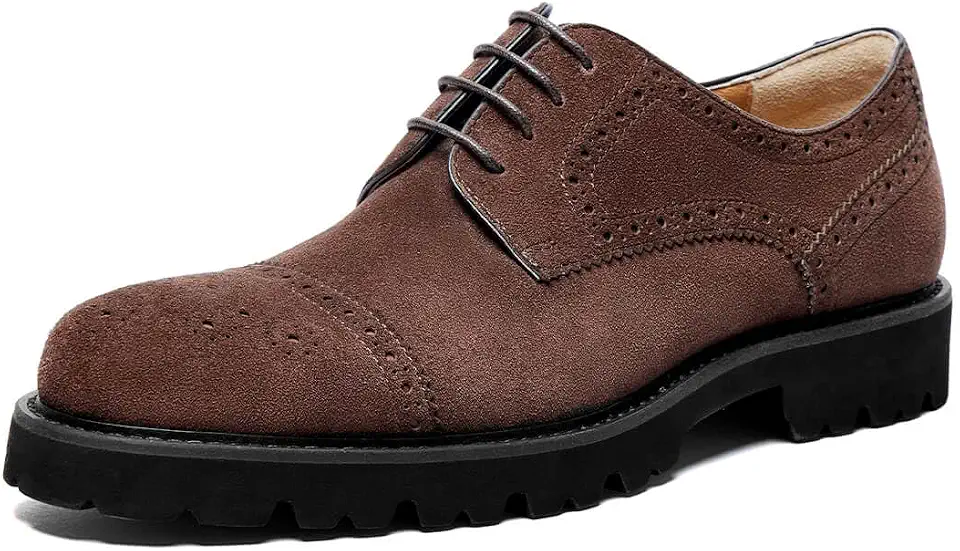
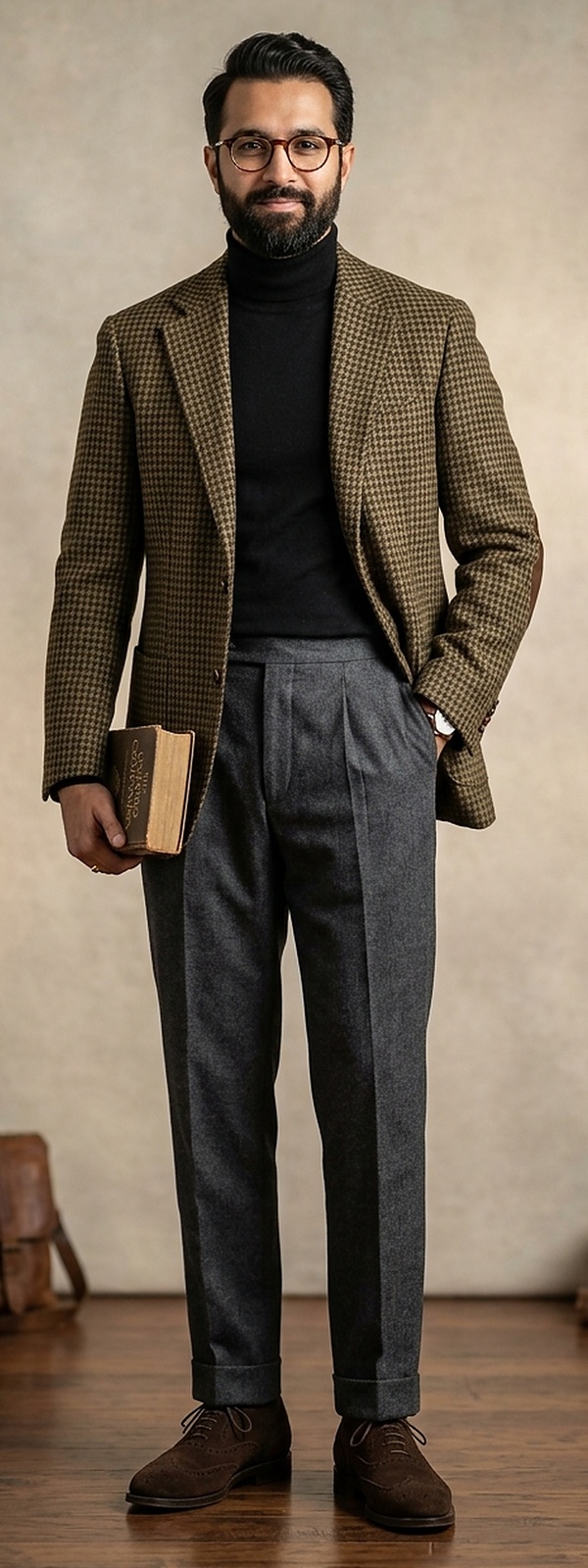
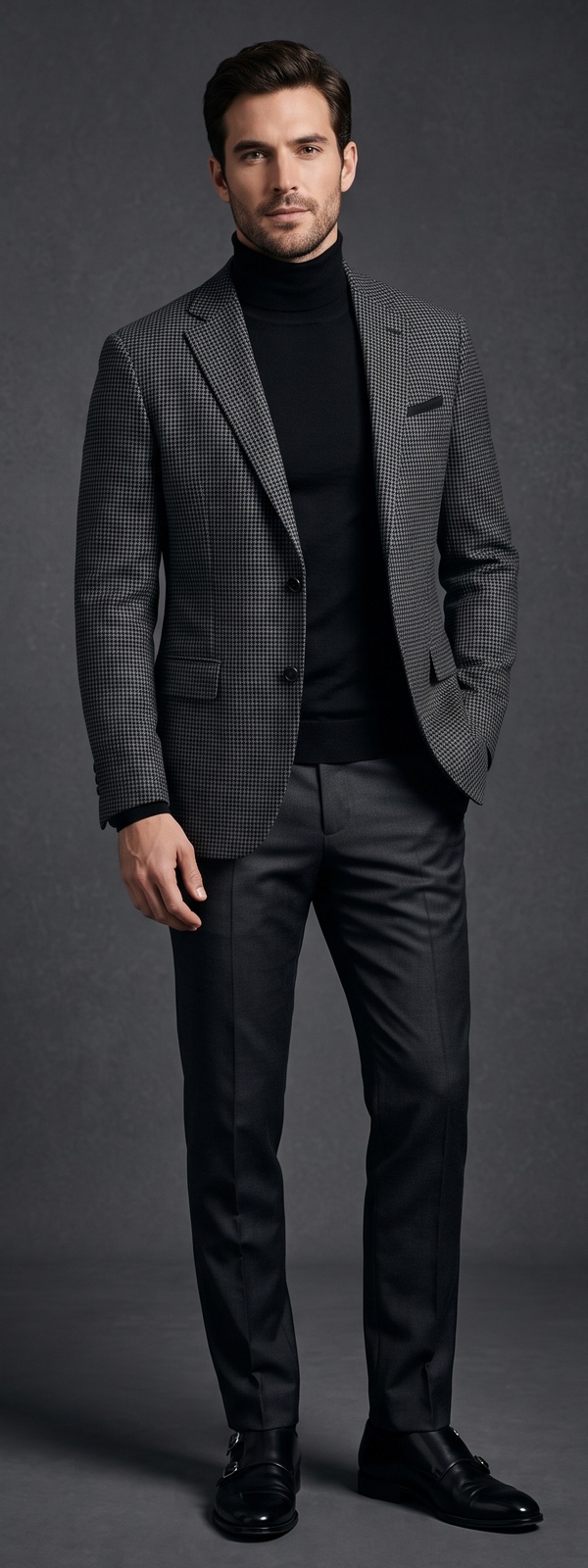
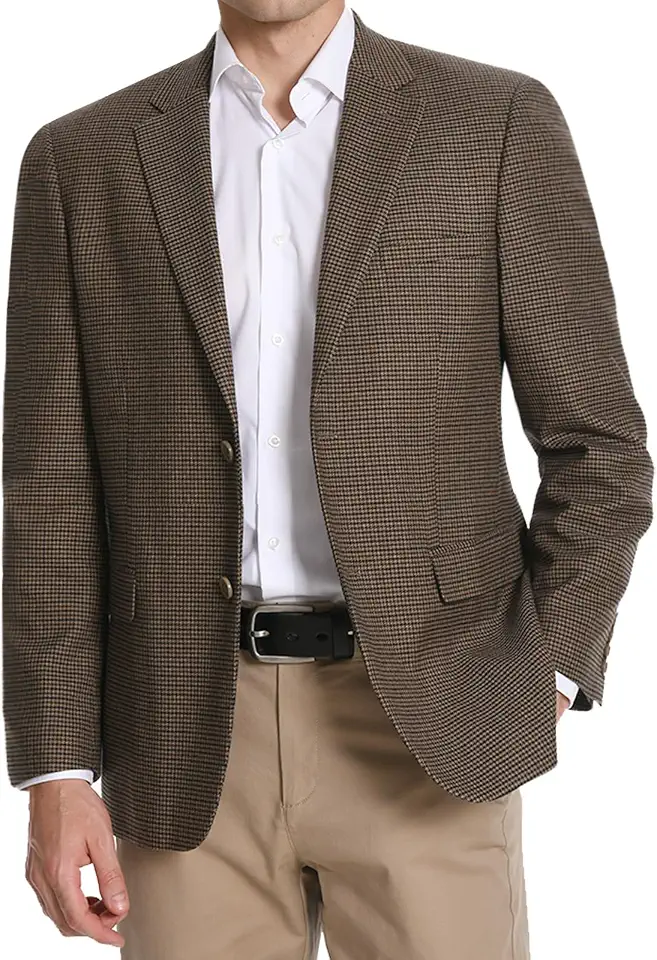
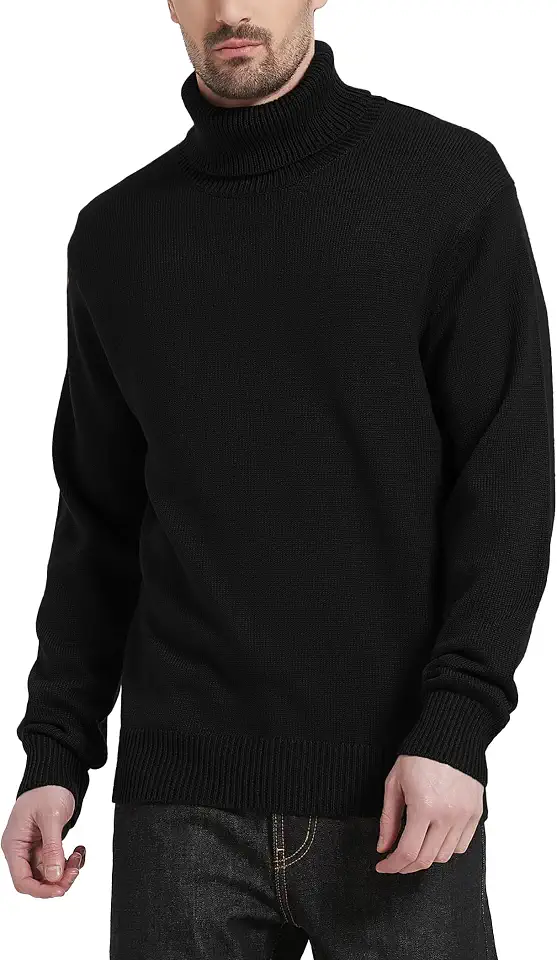
Dark Academia Houndstooth Tweed Blazer with Black Merino Rollneck and Flannel Trousers
5 pieces · Oct 9, 2026
 $191
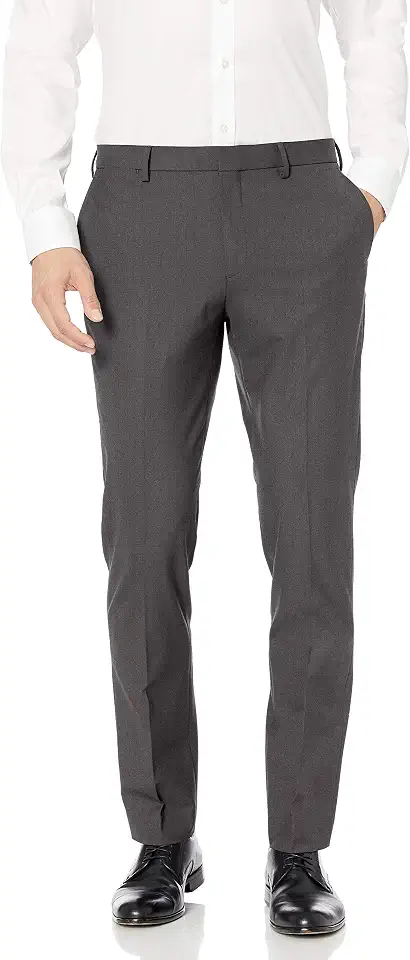
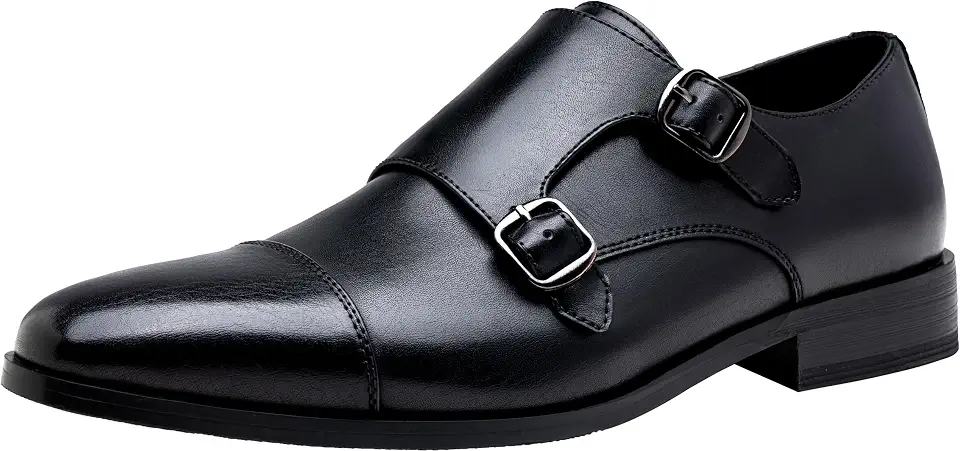
 $143
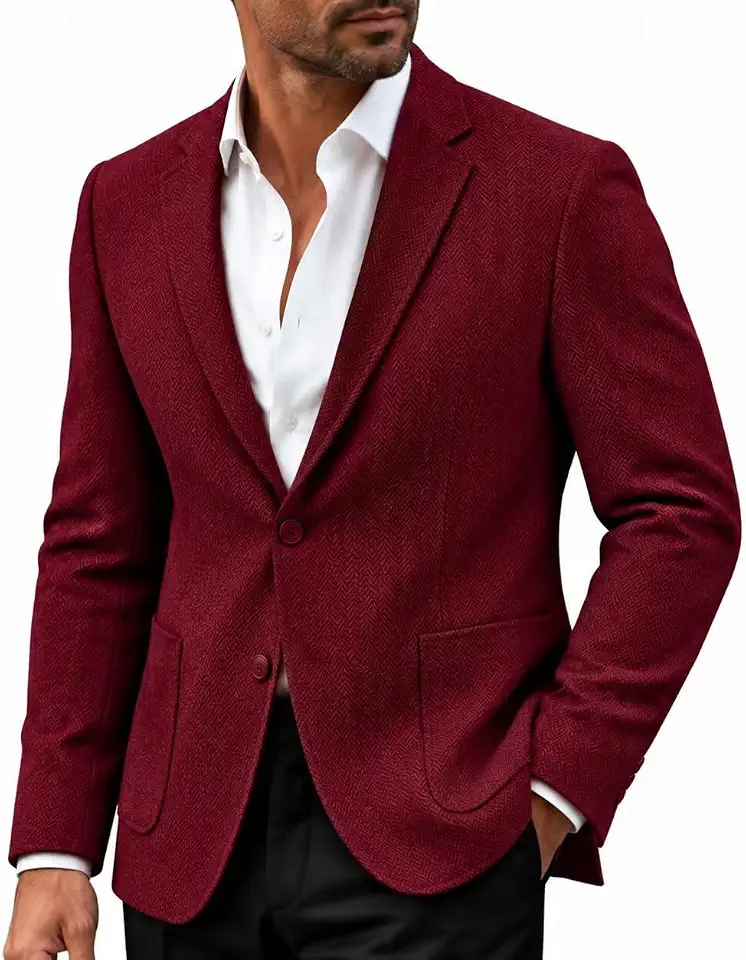

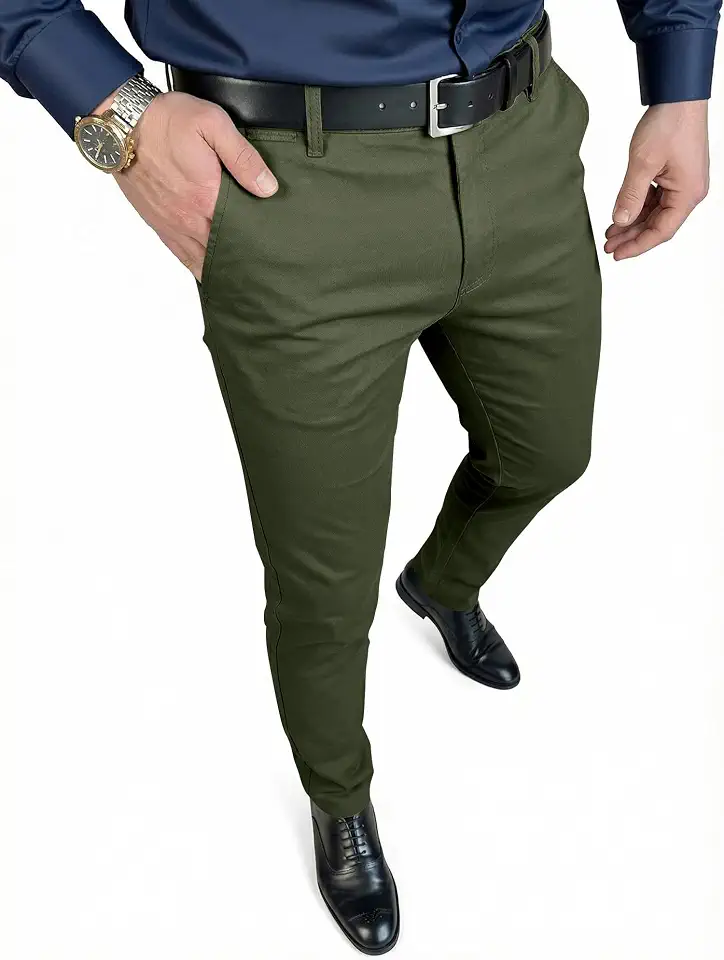
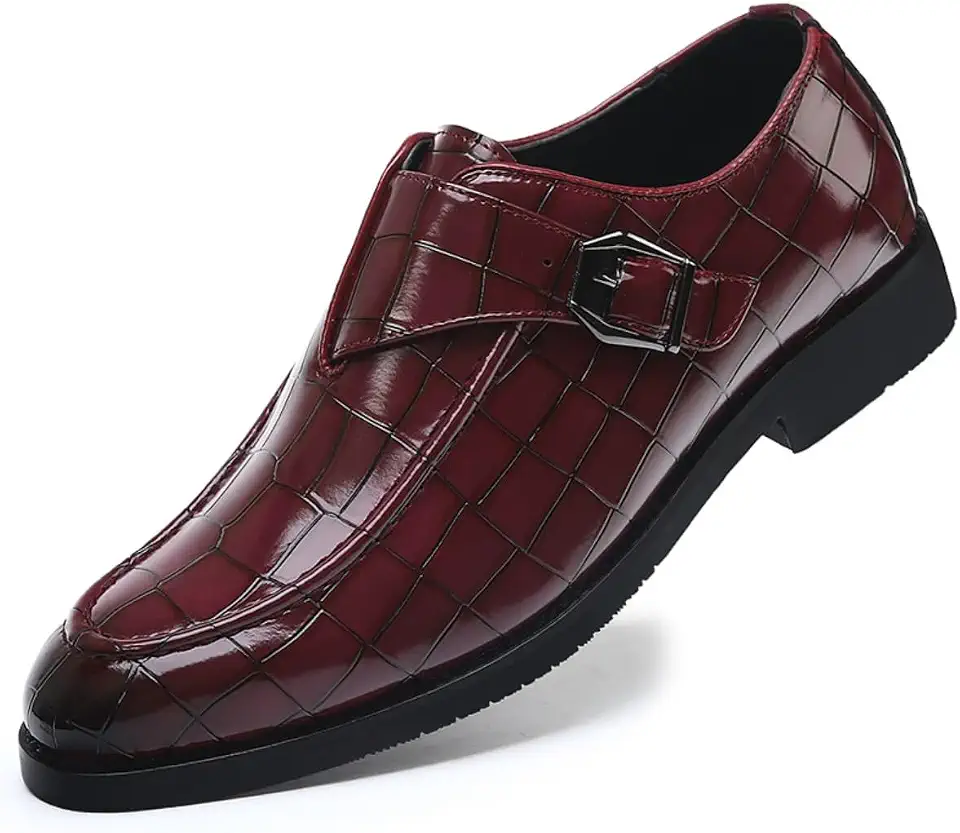
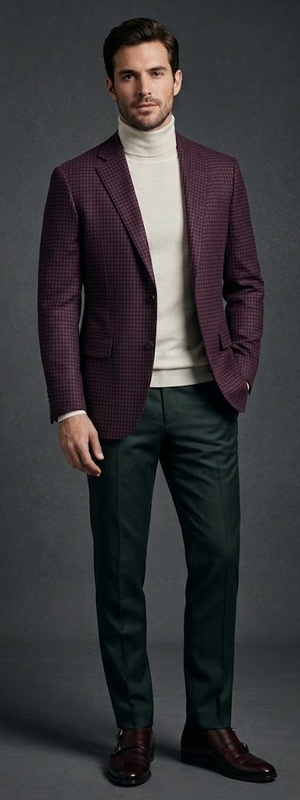
Refined Burgundy Houndstooth Blazer with Cream Turtleneck and Forest Green Dress Pants
5 pieces · Oct 7, 2026
 $186
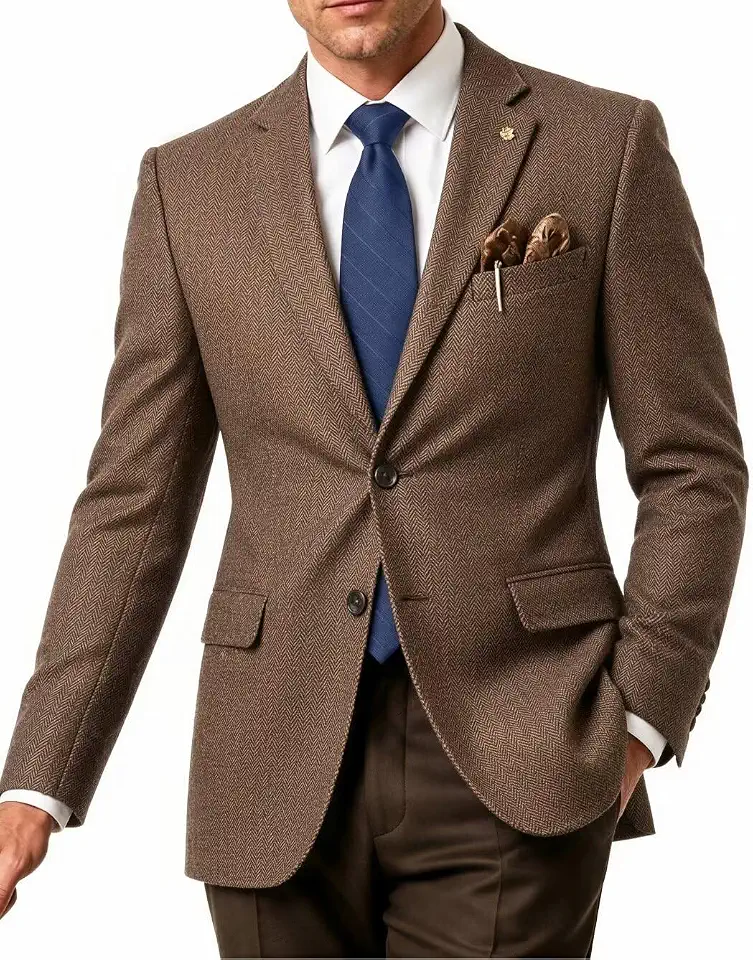
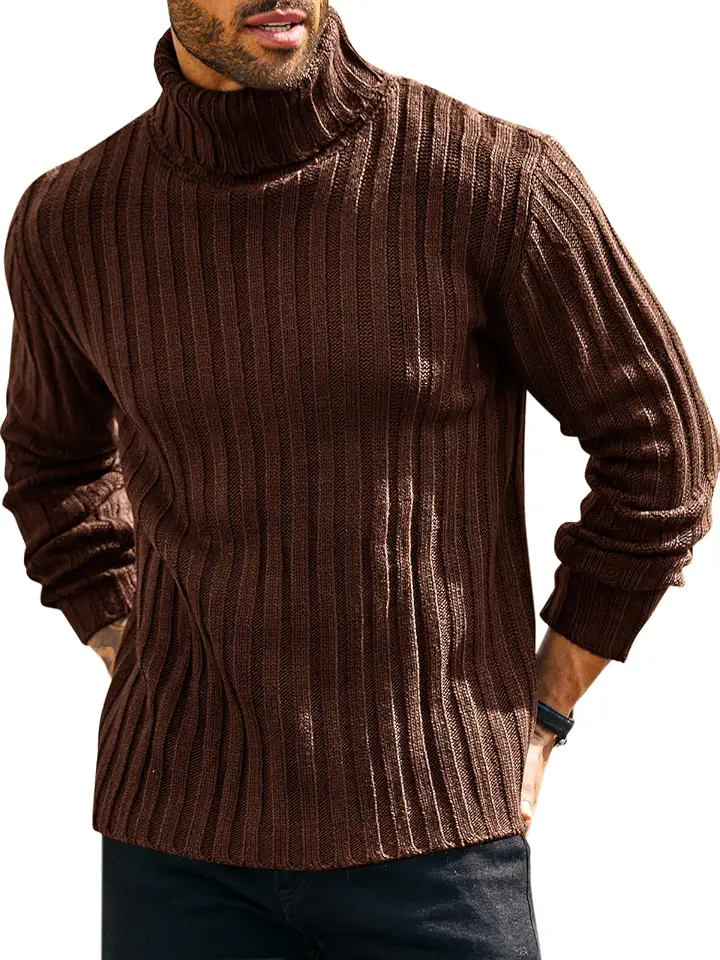
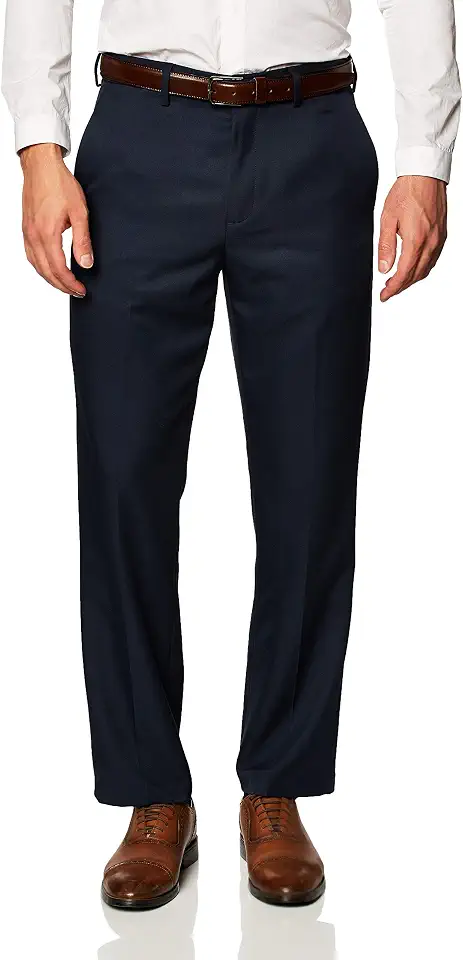
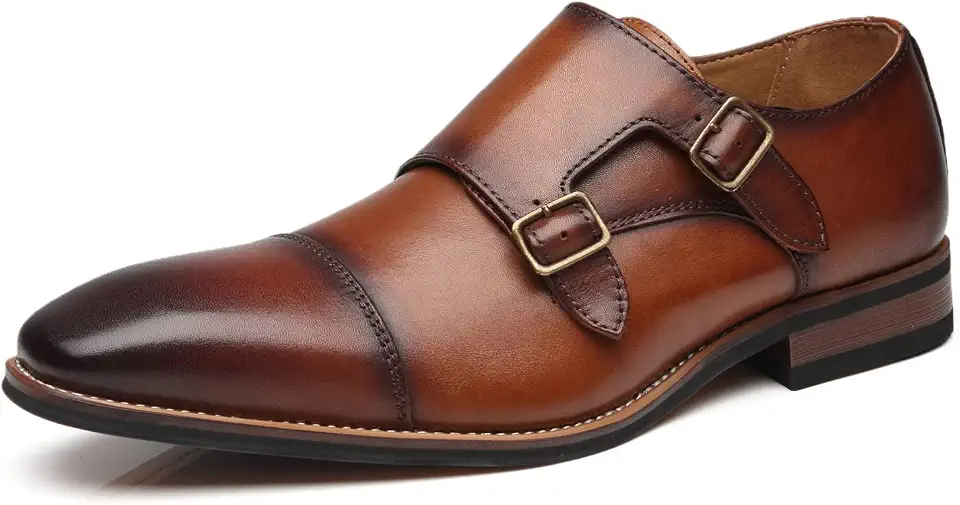
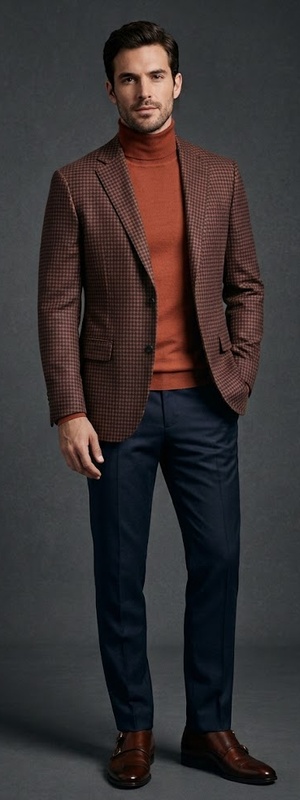
Smart Casual Brown Houndstooth Blazer with Rust Turtleneck and Navy Pants Look
5 pieces · Oct 7, 2026
1. The Scale Hierarchy Rule: Vary the Density
The single most common mistake men make when mixing patterns is pairing two patterns of identical physical size. If your blazer features a one-inch check and your shirt features a one-inch gingham check, both patterns fight aggressively for visual dominance. The human brain cannot determine where to focus, creating an optical illusion that feels vibrating and chaotic.
The foundational law of pattern mixing is to never combine patterns of the same scale:
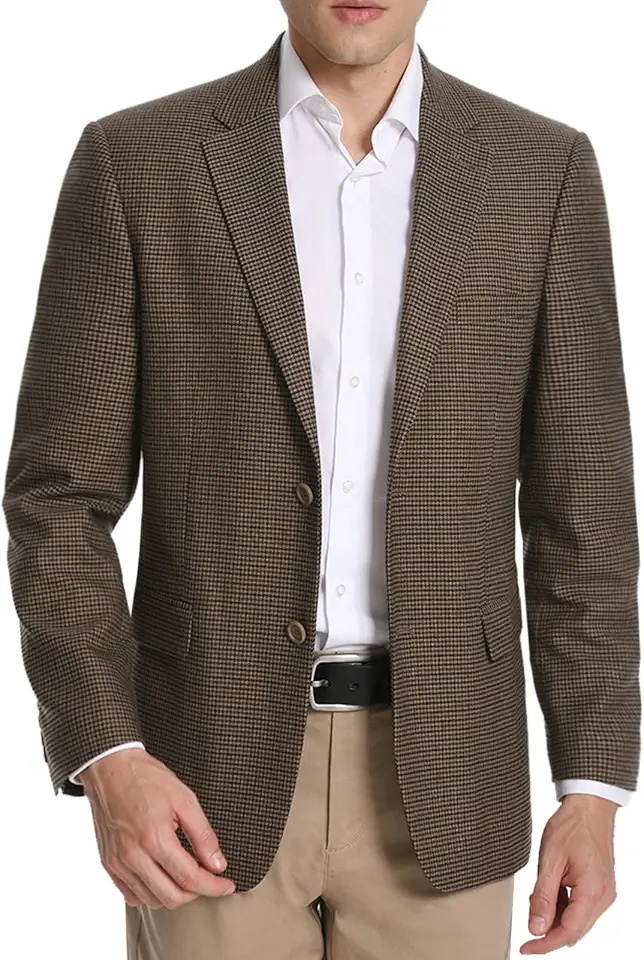
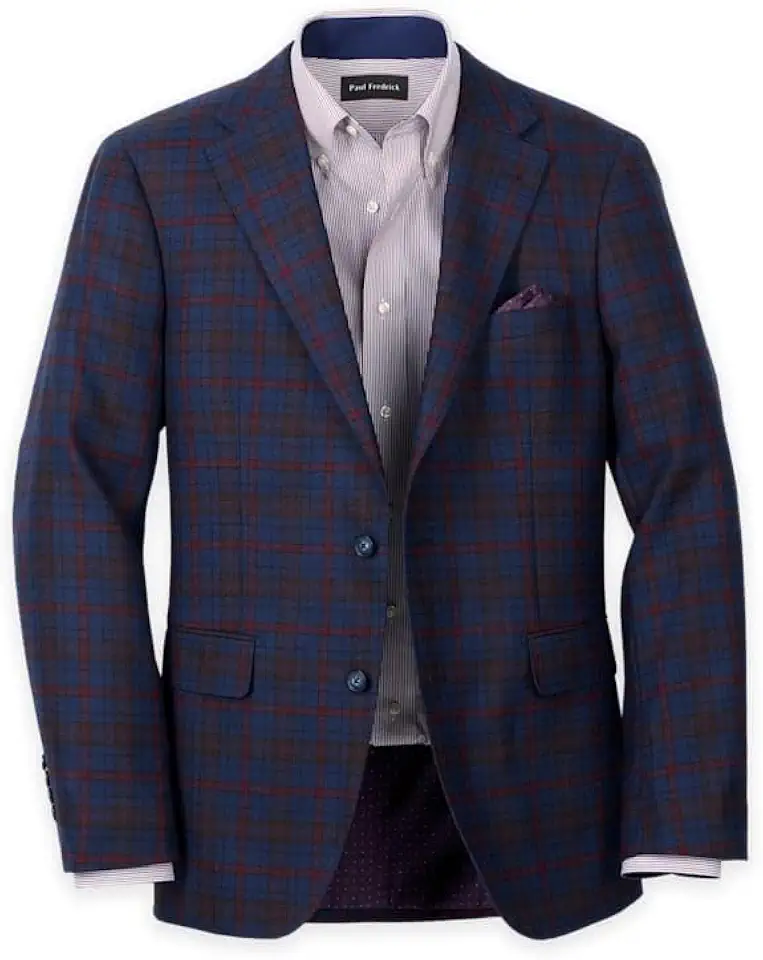
- The Macro Statement: Let one garment carry the large-scale pattern. A commanding sport coat in a bold brown-and-cream houndstooth, an oversized Glen plaid, or a wide windowpane check acts as your focal hero piece.
- The Micro Supporting Player: Pair that bold jacket with a shirt featuring an ultra-fine, tight pattern—such as a pencil-stripe, micro-gingham, or subtle graph-check. From across the room, the fine pattern reads almost like a solid neutral; only when stepping closer does its delicate geometry reveal itself.
- The Mid-Scale Tie: If introducing a third patterned element (such as a tie or pocket square), select a medium scale that sits comfortably between the macro jacket and the micro shirt.
2. Geometric Contrast: Linear Meets Interlocking
Different patterns communicate in distinct geometric languages. Combining patterns that share the same structural geometry often creates confusion, whereas pairing contrasting geometric structures creates automatic harmony.
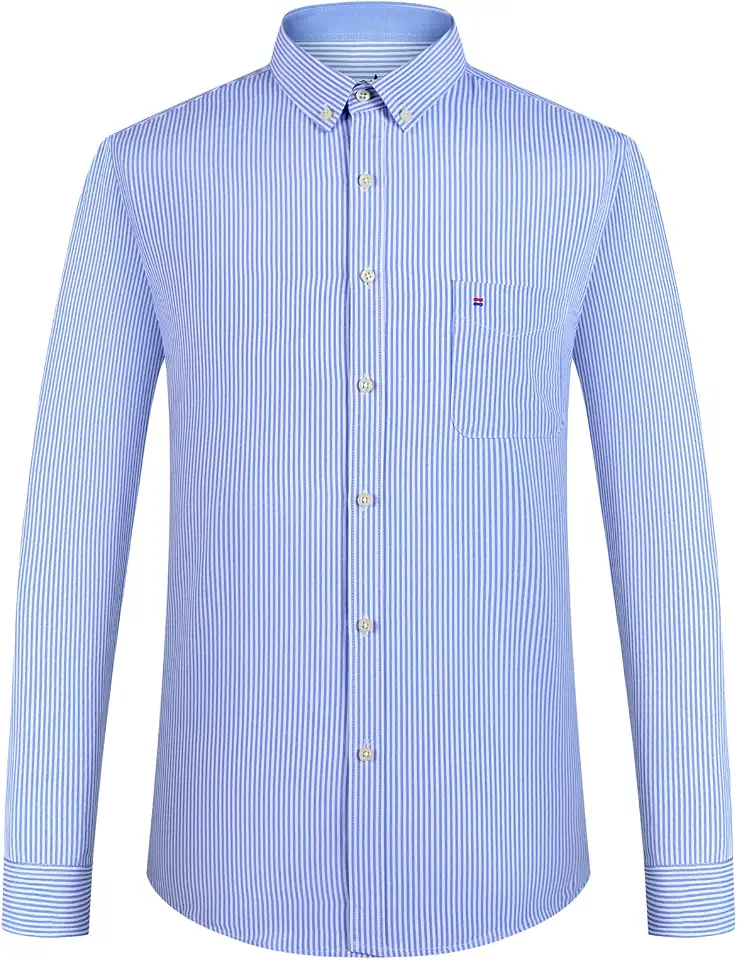
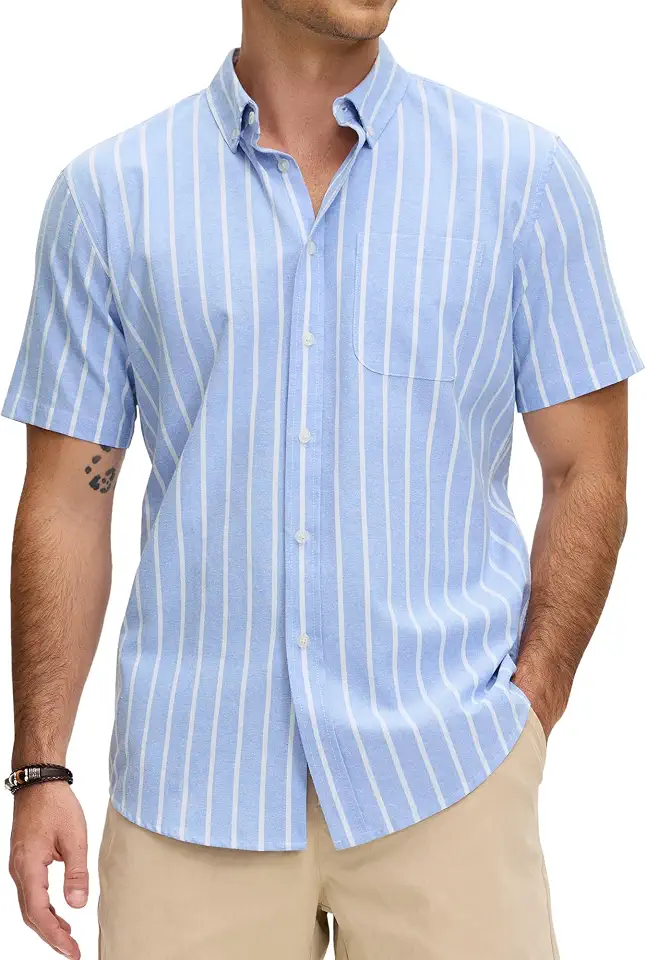
- Stripes with Checks (The Golden Partnership): Stripes are linear, directional, and clean. Checks and plaids are grid-based and multi-directional. When you wear a striped shirt beneath a checked or houndstooth blazer, the two patterns naturally complement each other because the eye easily distinguishes vertical lines from intersecting horizontal grids.
- Houndstooth with Micro-Dots: The broken, jagged tooth of a houndstooth weave provides jagged geometric punch that contrasts smoothly against the soft, organic circles of a dotted silk tie or pocket square.
- Avoid Check-on-Check: Pairing a checked shirt with a checked jacket is an advanced technique fraught with danger. Unless the scales differ by a factor of four, the intersecting boxes will invariably clash.


3. The Color Bridge: Shared Chromatic DNA
Patterns cannot exist in a vacuum; they must share chromatic ancestry. To make a patterned jacket, shirt, and tie feel like a unified composition, the secondary pattern must pull at least one subtle accent color from the primary pattern.
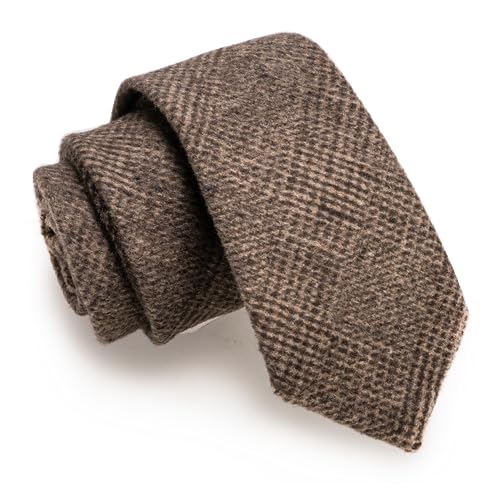
Consider a vintage tweed houndstooth sport coat woven with dark chocolate brown, cream, and faint flecks of forest green and rust:
- You can bridge this jacket by wearing a pale cream shirt with a fine forest green hairline stripe.
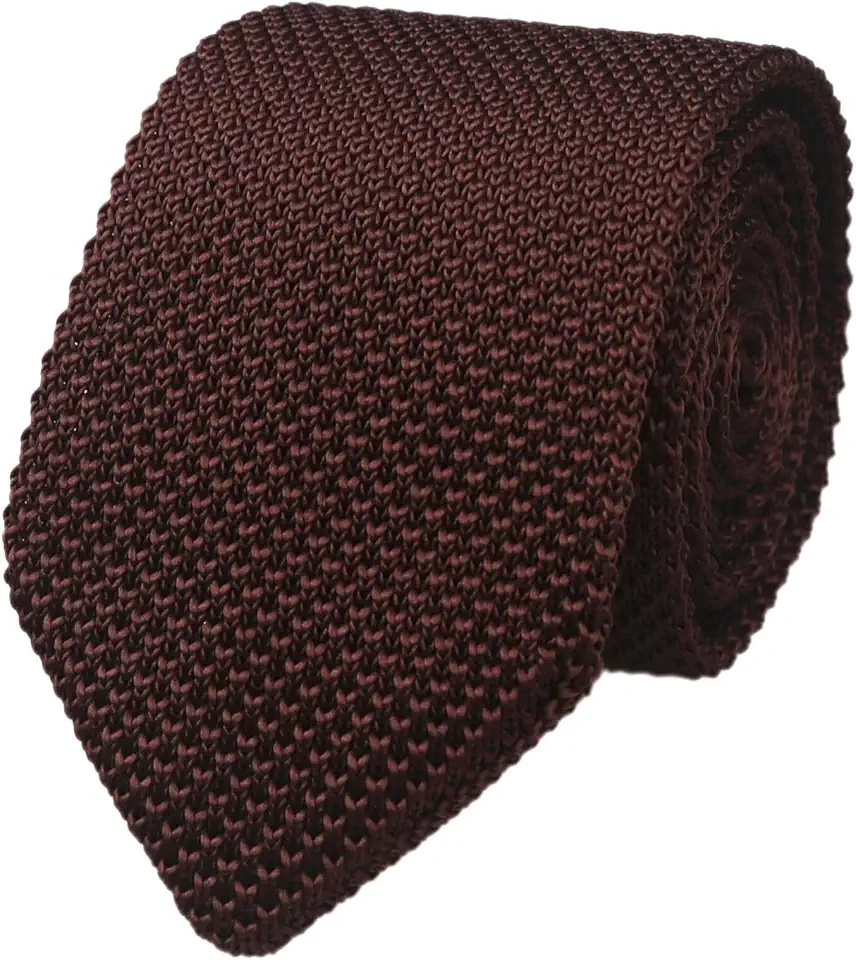
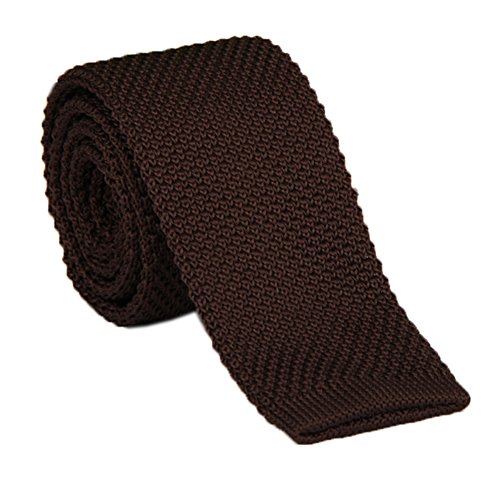
- Complete the ensemble with a rich rust-colored wool knit tie.
- Because the green in the shirt and the rust in the tie directly mirror the accent flecks hidden inside the tweed weave, the three distinct patterns instantly lock together in harmonious balance.
4. Solid Anchors: Giving the Eye a Place to Rest
No matter how skillfully you mix patterns on your upper half, an outfit requires quiet, solid anchors to keep the overall composition grounded. If every single item you wear features a pattern—jacket, shirt, tie, pocket square, trousers, and socks—you will look like a swatch book.
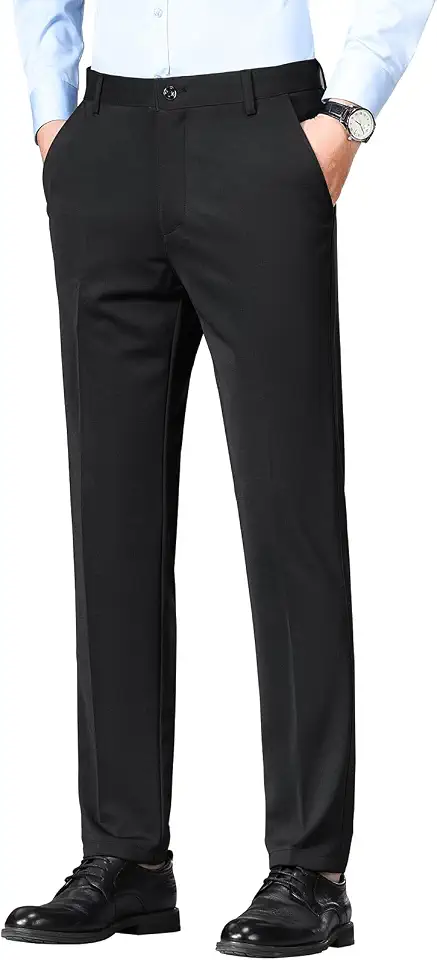
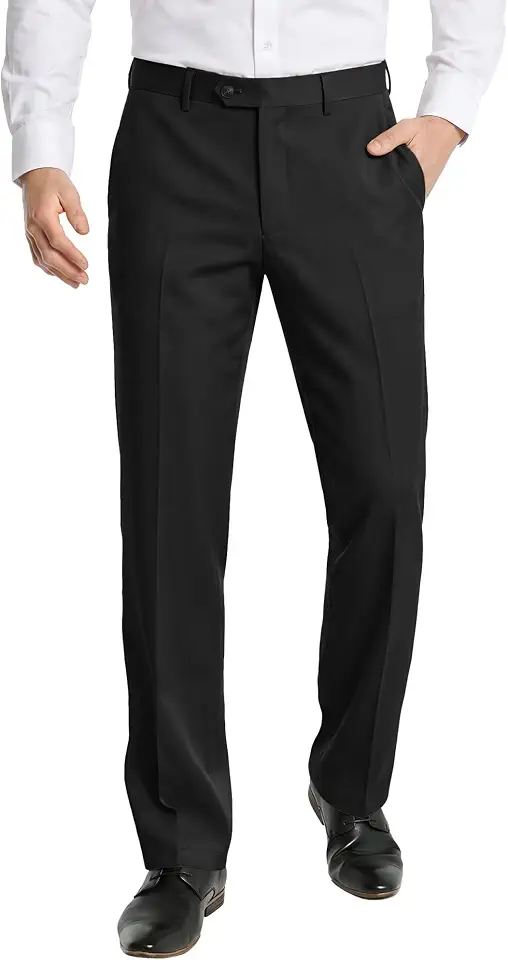
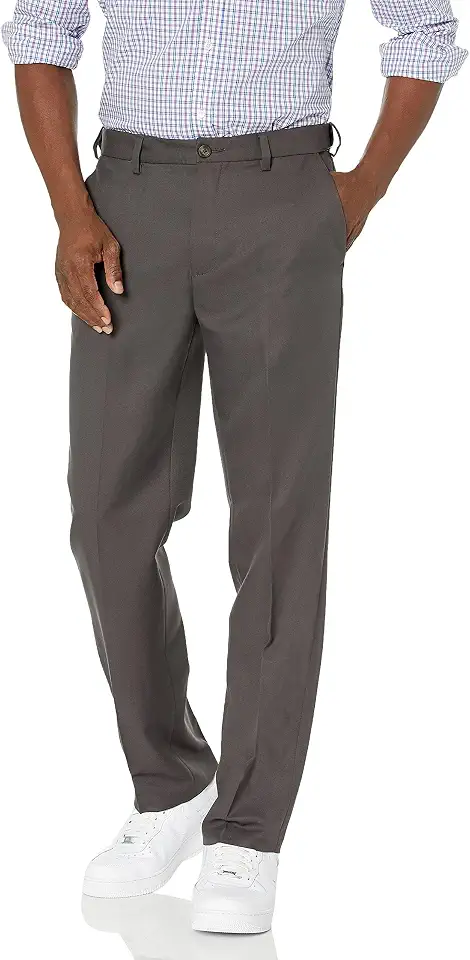
- Anchor With Solid Trousers: When your jacket and shirt are patterned, your trousers should be a solid, well-tailored neutral. Plain grey wool flannel dress pants, crisp navy chinos, or dark washed denim provide an essential visual resting place that stabilizes the outfit.
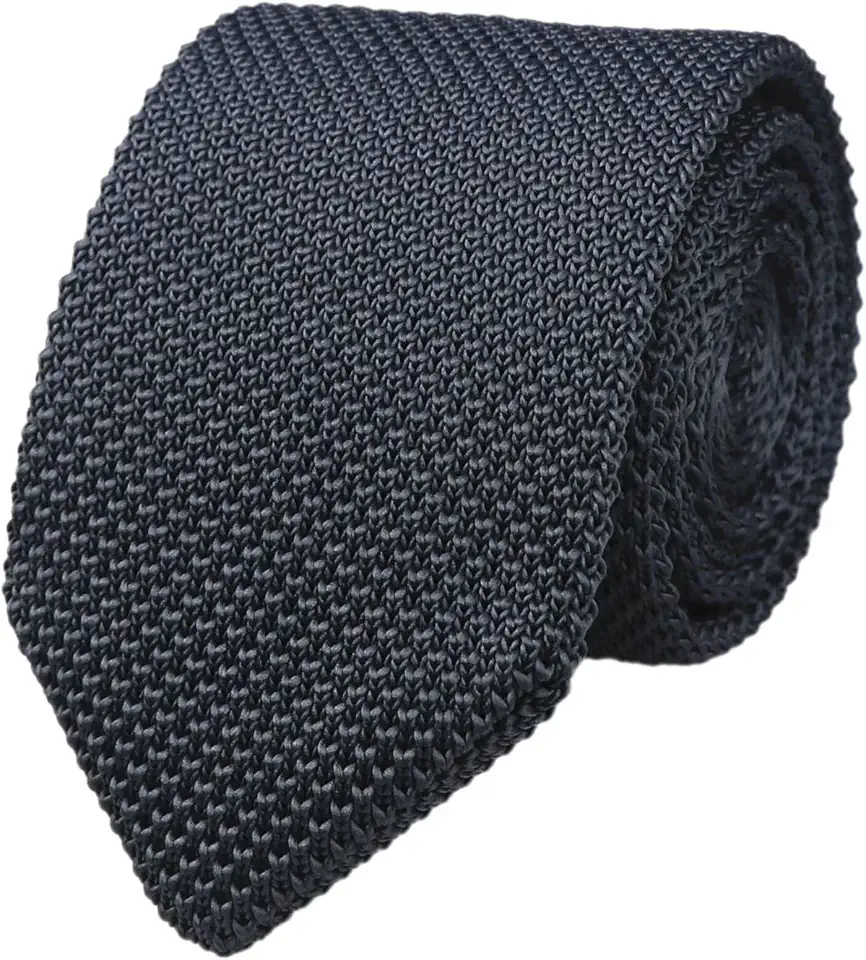
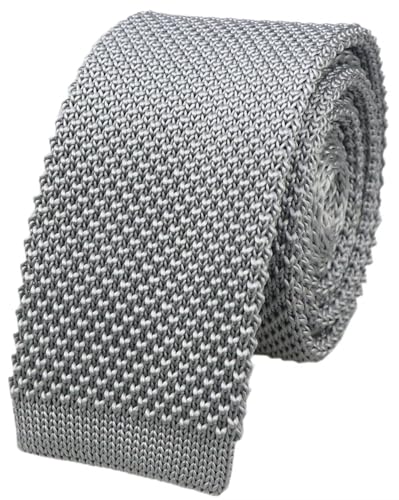
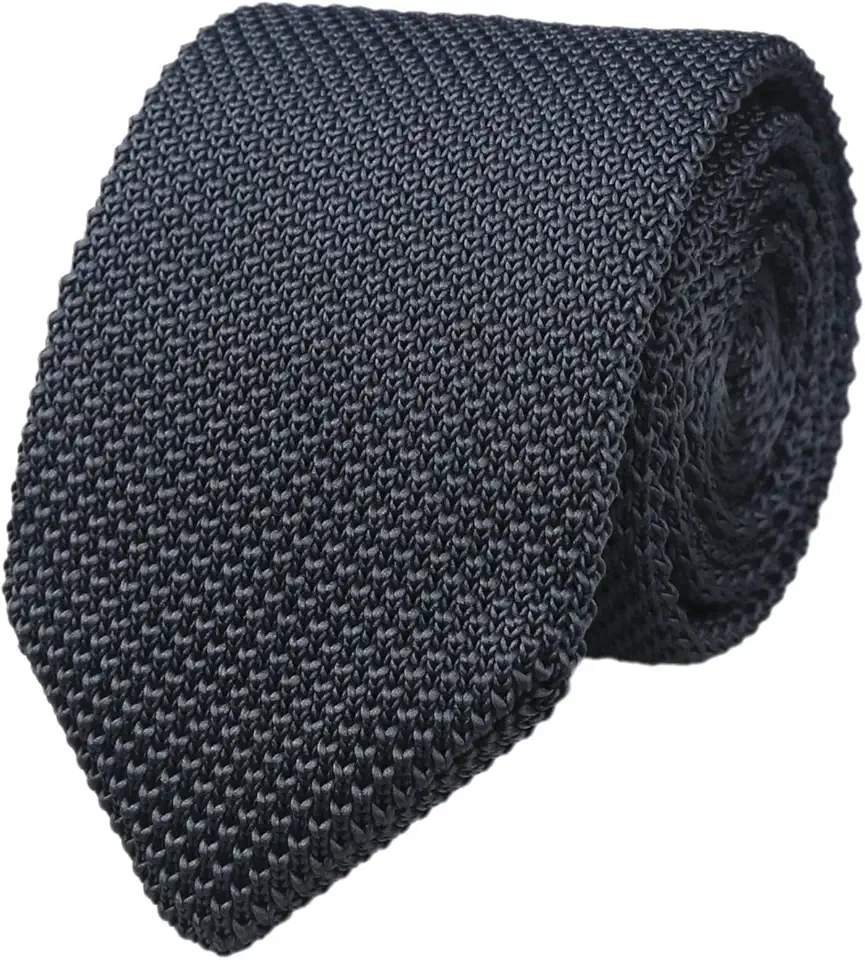
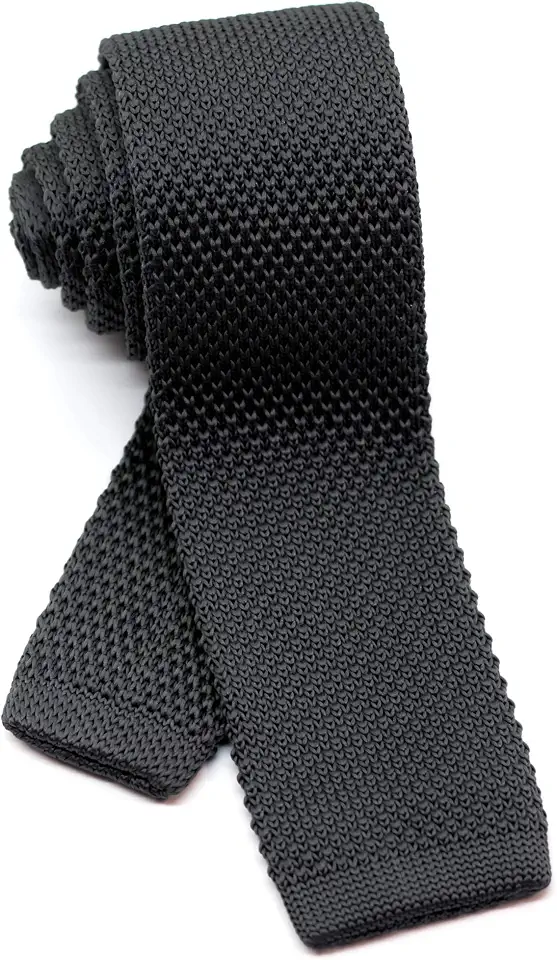
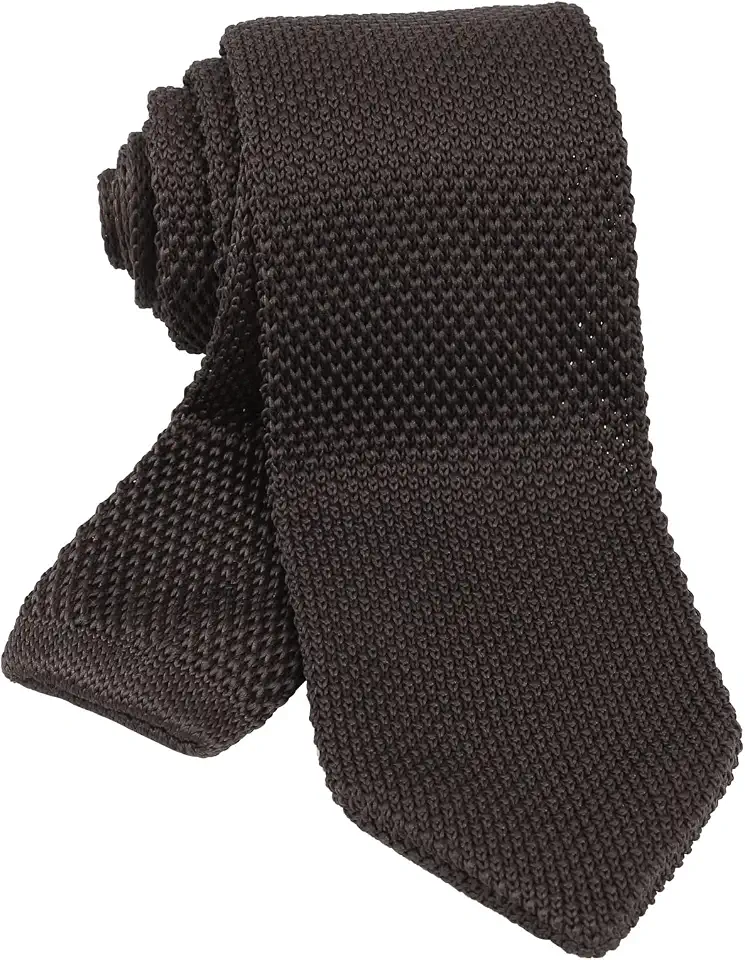
- Textured Solid Ties: When mixing a patterned jacket and a patterned shirt, opt for a solid tie that introduces rich texture instead of a third print. A dark navy grenadine tie, a charcoal wool knit tie, or a dark brown cashmere tie adds luxurious depth without introducing competing lines.
The Golden Rules of Mixing Patterns
- Vary Pattern Scale Dramatically: Never pair patterns of the same physical dimensions; balance macro focal pieces with micro supporting prints.
- Contrast Geometries: Combine directional lines (stripes) with grid-based or broken weaves (checks, plaids, houndstooth).
- Establish a Color Bridge: Ensure your shirt or accessory picks up a secondary accent tone woven into your jacket.
- Anchor With Solid Trousers: Keep your trousers clean and solid to provide essential visual stability.
- Limit to Two to Three Patterns: For refined elegance, restrict patterned items to two (or maximum three) pieces in any single outfit.
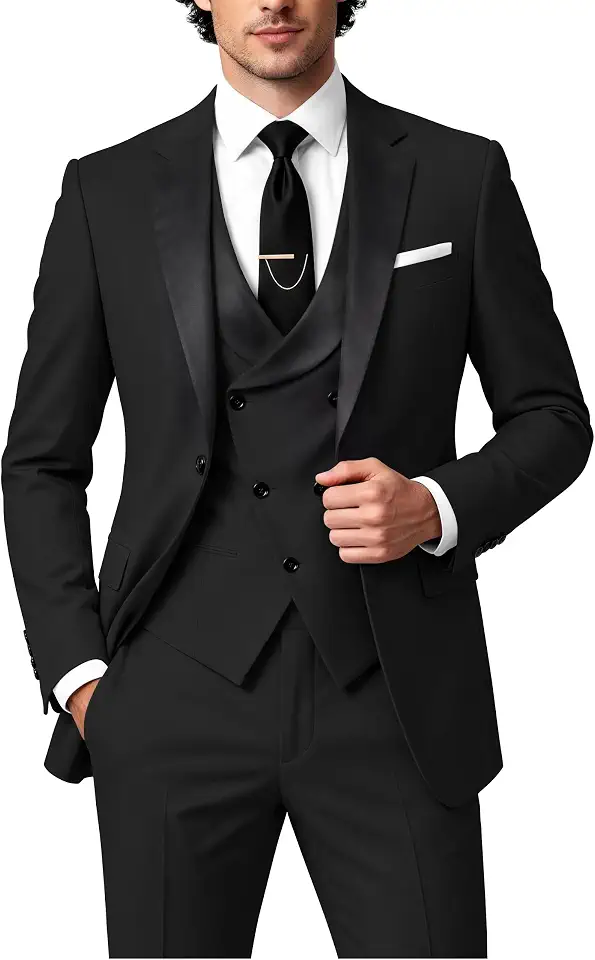
Pattern Mixing Master Blueprint
| Focal Piece (Macro) | Supporting Piece (Micro) | Accessory Bridge | Solid Anchor Trousers | Visual Vibe |
|---|---|---|---|---|
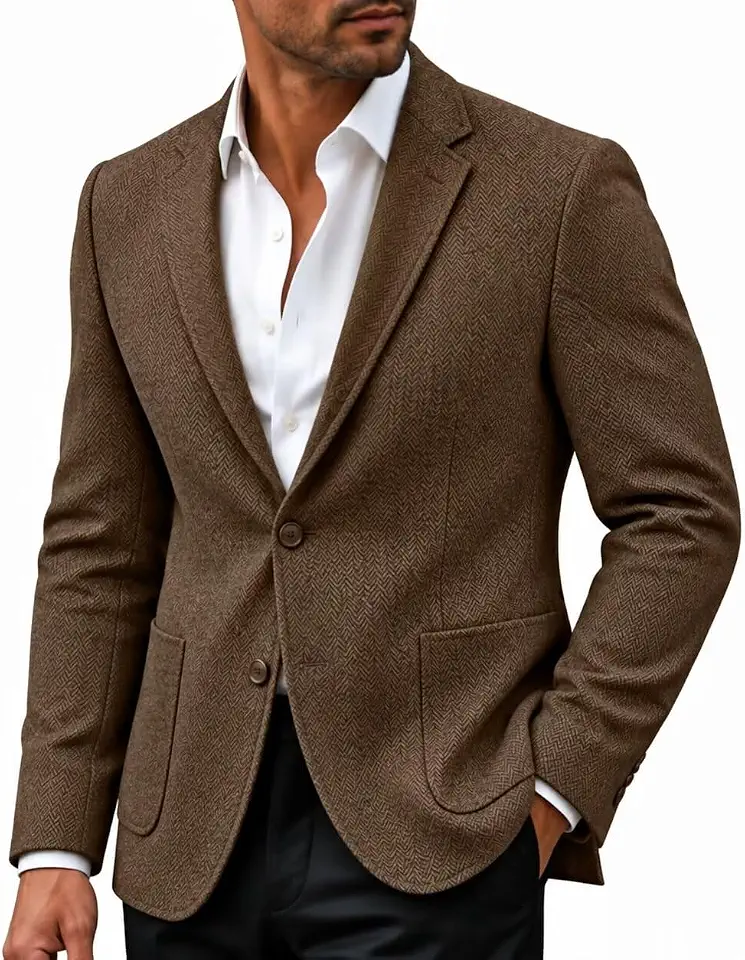
| Brown Houndstooth Blazer | Blue Hairline Stripe Shirt | Solid Dark Brown Knit Tie | Charcoal Flannel Dress Pants | British Country Sartorial |
| Navy Windowpane Suit | Micro-Gingham Poplin Shirt | Burgundy Grenadine Silk Tie | Matching Navy Suit Trousers | Modern Executive Sophistication |
| Grey Glen Plaid Sport Coat | Pink Bengal Stripe Oxford | Navy Foulard Print Pocket Square | Dark Navy Tailored Chinos | Classic Ivy League Tailoring |
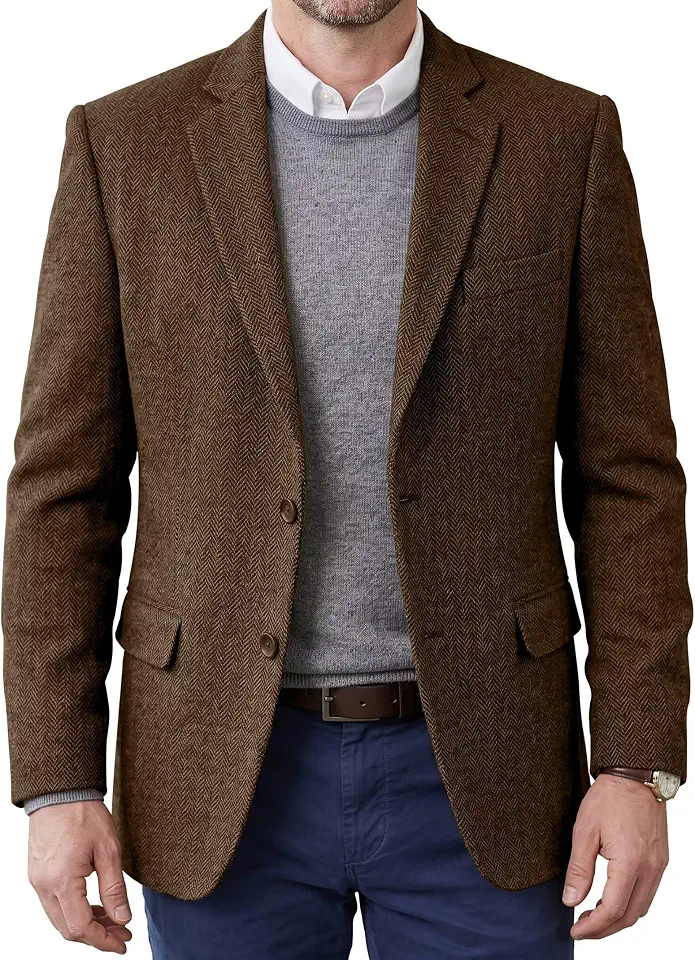
| Olive Tweed Field Jacket | Cream Tattersall Check Shirt | Forest Green Wool Necktie | Chocolate Corduroy Trousers | Rustic Autumn Heritage |
| Charcoal Chalkstripe Suit | Solid White Twill Shirt | Polka-Dot Silk Pocket Square | Matching Chalkstripe Pants | High-Contrast Power Tailoring |
| Black-and-White Houndstooth | Fine Black Pin-Check Shirt | Solid Black Silk Knit Tie | Medium Grey Pleated Trousers | Monochromatic Modern Elegance |
Common Mistakes to Avoid
- The Equal-Scale Static: Wearing a bold multi-color plaid shirt with a bold plaid jacket creates an eye-straining mess.
- The Clashing Color Palette: Mixing patterns that share zero common colors makes the outfit feel like separate garments grabbed in the dark.
- Patterned Trousers With Patterned Jackets: Unless you are wearing a complete matching suit, pairing patterned sport coats with patterned trousers almost always fails.
- Neglecting Fabric Weights: Pairing a heavy, rustic winter tweed jacket with a delicate, shiny summer silk shirt creates an unresolved texture clash.
Conclusion
Mixing patterns is the ultimate sartorial bridge between classic tradition and expressive personal style. By honoring scale hierarchy, combining contrasting geometries, and anchoring your layers with shared accent colors, you elevate your tailoring from ordinary conformity into an artful expression of masculine elegance.

Found this style article helpful?
All curated searches
Related Reading
Houndstooth Wool Overcoats: Broken Graphic Winter Poise
A distinguished winter outerwear collection featuring brown, black, and cream houndstooth patterned wool overcoats. Highlighting how micro-check and houndstooth weaves inject vintage British academic authority over turtlenecks and tailored slacks.
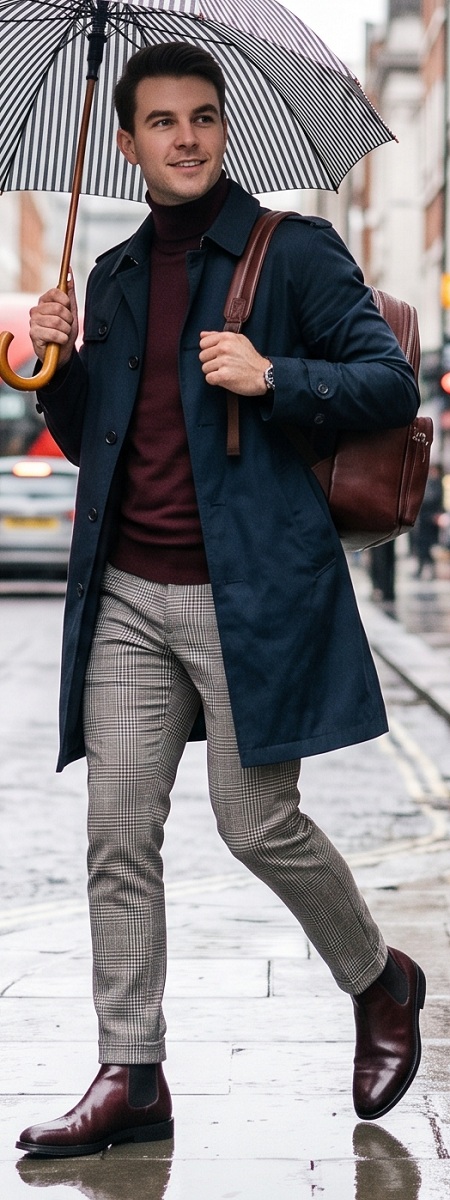
Prince of Wales & Windowpane: Layered Check Tailoring
Celebrating the 2026 runway obsession with heritage checks—from glen plaid and Prince of Wales overcoats to bold windowpane and micro-houndstooth blazers. Master pattern scale, tonal grounding, and multi-layered sartorial texture.
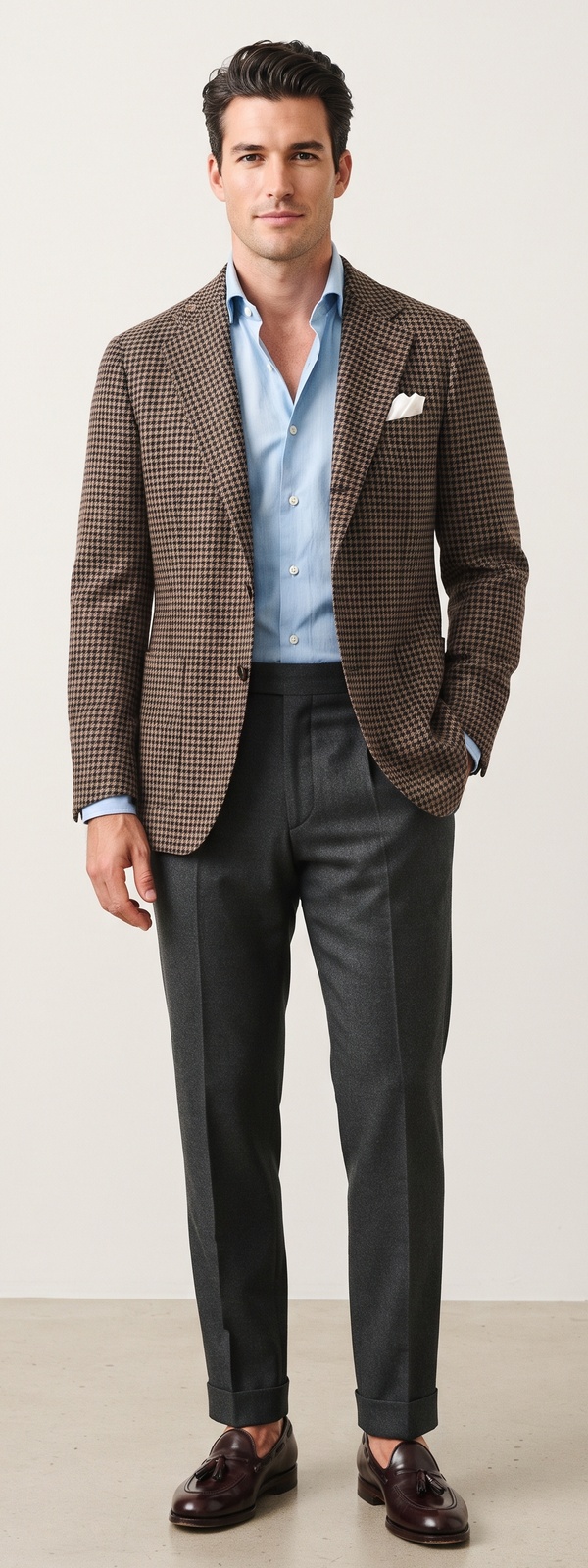
How to Style Men's Houndstooth Patterns: Heritage to Modern Guide
Master menswear's most sophisticated geometric weave with our complete guide to styling men's houndstooth blazers, overcoats, and modern heritage separates.
How to Wear a Turtleneck with a Blazer for Sharp Style
Master pairing a turtleneck with a tailored blazer, dress pants, and leather loafers for sophisticated dark academia and executive smart-casual looks.
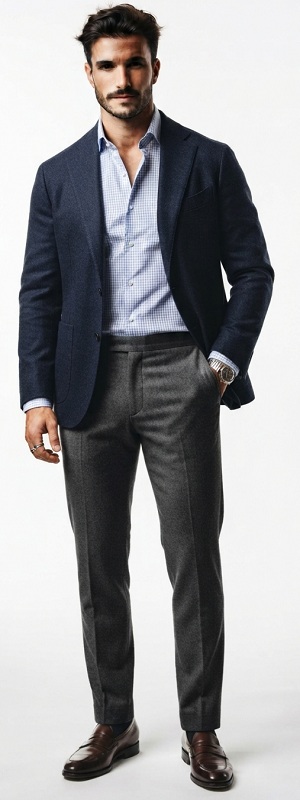
What to Wear to a Rustic Barn or Vineyard Wedding — Men's Complete Guide
Learn what to wear to a rustic barn or vineyard wedding on a budget. Explore earthy tailored suits, textured fabrics, and stylish outdoor-ready footwear.
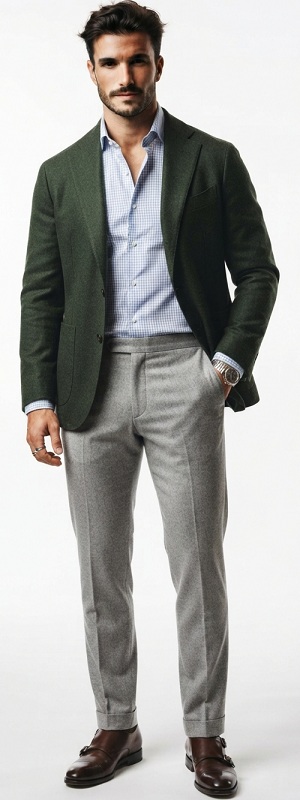
What to Wear on a Heritage Steam Railway Trip — Men's Guide
Master vintage steam railway excursion style with tailored tweed blazers, crisp oxford shirts, wool trousers, leather brogues, and classic newsboy caps.
Other Reading
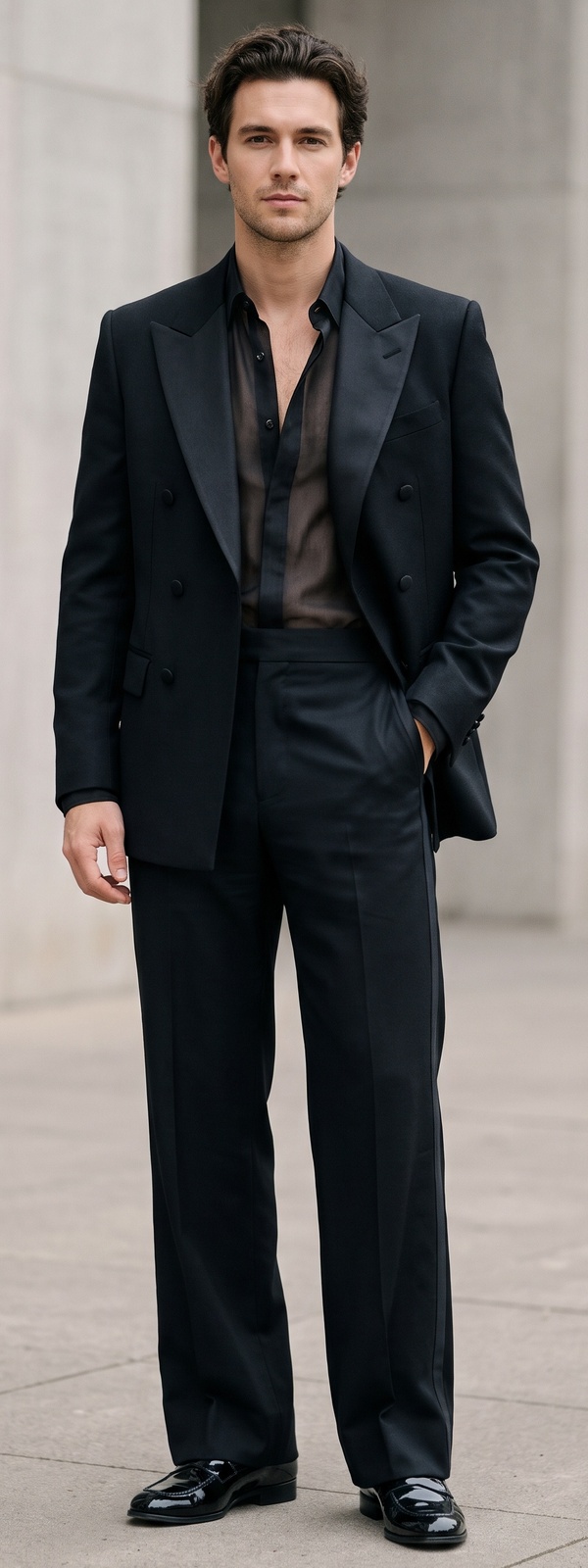
What to Wear to a Mardi Gras Ball — Men's Formal Guide
Master Mardi Gras krewe ball attire with traditional White Tie tails, black tuxedo tailoring, formal accessories, and essential ball etiquette.
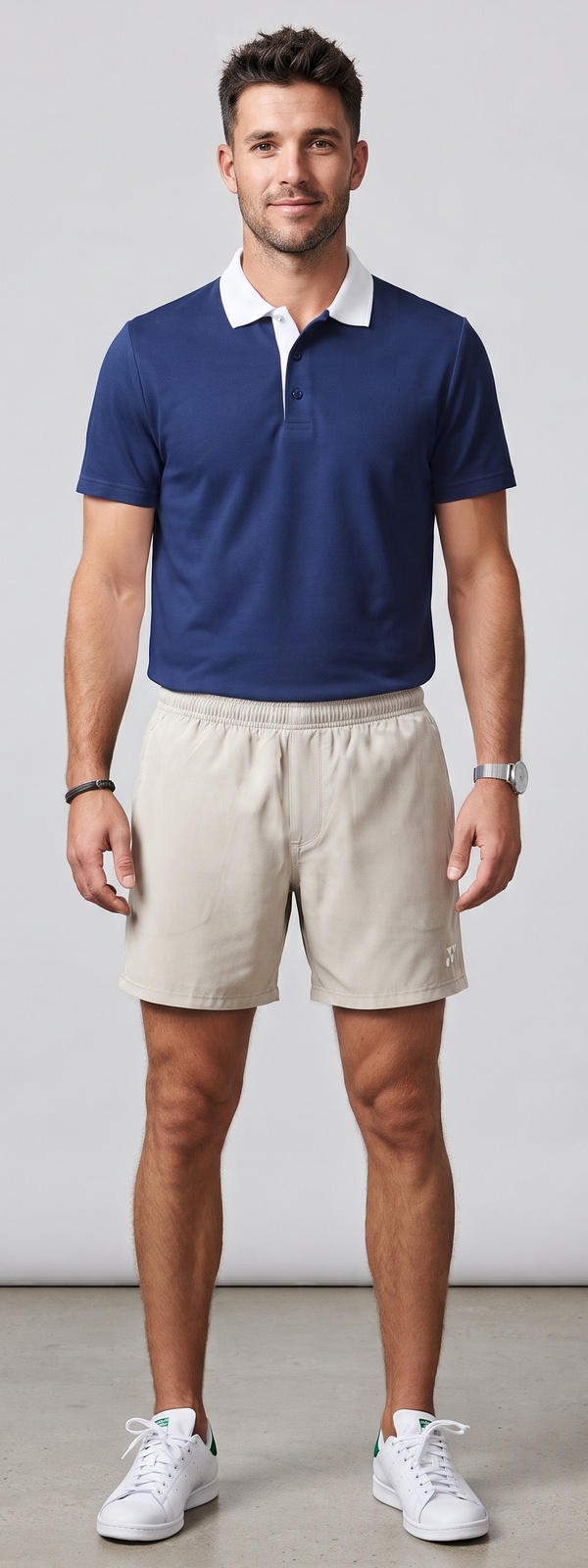
Tailored Chino Shorts: Clean-Cut Warm-Weather Staples
Classic flat-front and pleated cotton twill shorts cut cleanly above the knee in khaki, stone, and navy. Effortlessly paired with camp-collar shirts, cable cricket sweaters, and boat shoes for sunny leisure.
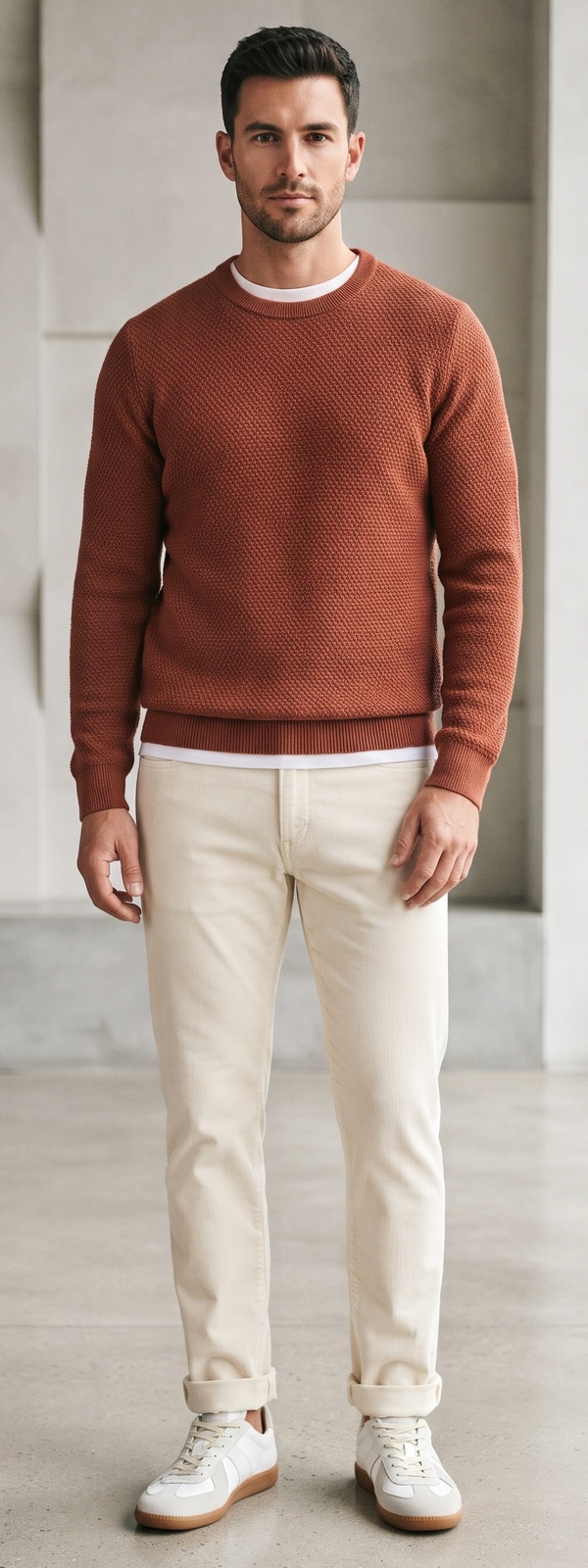
How to Style Men's Cream Corduroy Trousers Casually
Style men's cream and off-white corduroy trousers casually with earth-toned overshirts, tweed jackets, and suede boots for fresh winter lightness.